


 Jarrett Earnest
Agent provocateur: Emerald Fennell as a “bad reader” of
Emily Brontë’s 1847 novel.
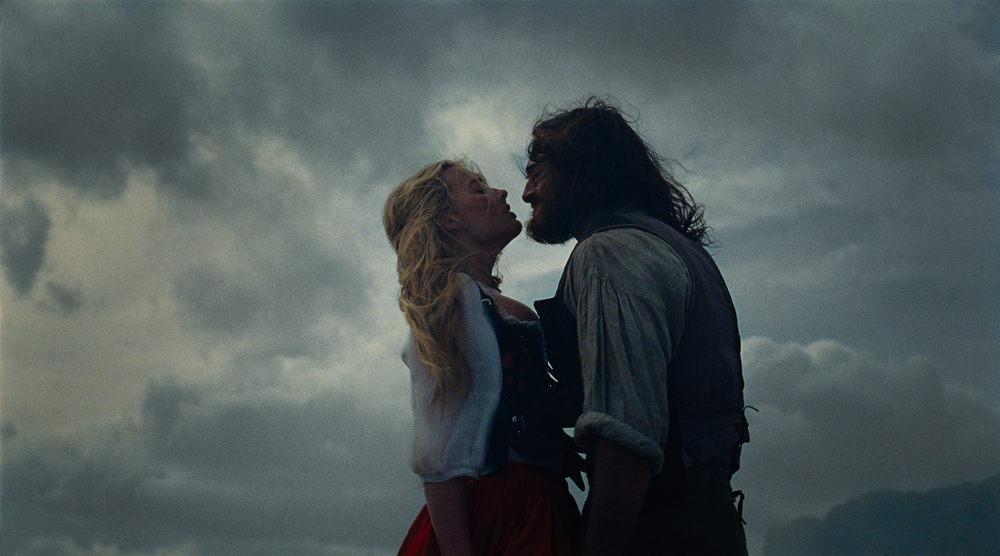
Margot Robbie as Catherine Earnshaw and Jacob Elordi as Heathcliff in “Wuthering Heights.” Courtesy Warner Bros. Pictures. © Warner Bros. Ent.
“Wuthering Heights,” directed by Emerald Fennell,
now in theaters
• • •
Emily Brontë’s Wuthering Heights (1847) is a sadistic fever dream of obsession and sublimation. Neither romance nor ghost story—though routinely reduced to both in adaptations—the novel is built out of a crystalline architecture of slanted reflections and mirrored gestures. Across two generations, pairs of siblings and pseudo-siblings become lovers, in-laws, and enemies, all within the near total isolation of two homes on the Yorkshire moors. By degrees, the narrative’s emotional and psychological abstraction tightens like a garrote, inside an acutely observed landscape: subtle qualities of moonlit mists and emergent scents of crocuses. In its extremity and cruelty, its unusual depiction of cosmic forces in an austerely material world, there is nothing else quite like Wuthering Heights.
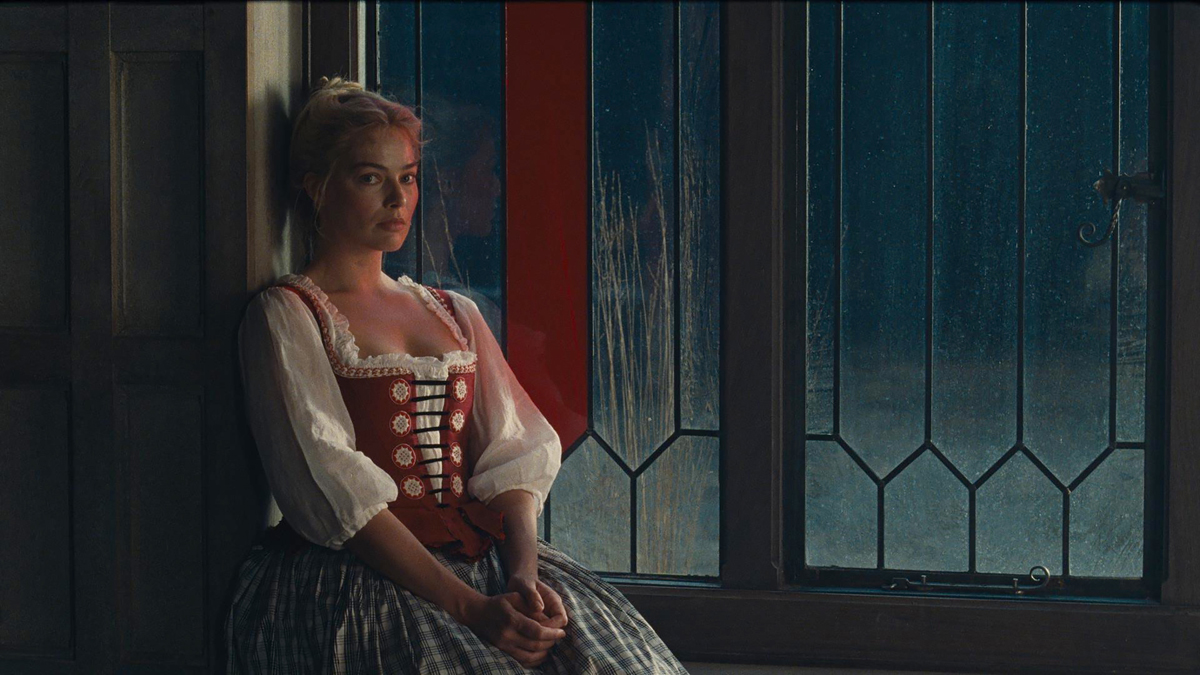
Margot Robbie as Catherine Earnshaw in “Wuthering Heights.” Courtesy Warner Bros. Pictures. © Warner Bros. Ent.
In 1932, then in his mid-twenties, the painter Balthus began illustrating episodes from the novel that had exerted talismanic power over him: the child protagonists, Catherine and Heathcliff, slipping out of windows, getting their hair pulled, lying in the moors, etc. In one drawing, Catherine stands in a tight dress while her hair is combed by a wizened servant, Nelly (who recounts the book’s story), as a scowling Heathcliff sits beside. Balthus also made a large oil painting of this scene, La toilette de Cathy (1933), in which Catherine’s dressing gown is thrown open, presenting her pale woman-child-doll body: large breasts, narrow hips, and hairless pudenda. Catherine, explicitly a brunette in the book and in his earlier drawings, is made blonde. She and Heathcliff both seem too pissed off and emotionally remote for the staged erotic display. Balthus lends his own features to the demonic young tyrant—and his lover Antoinette’s to the pitiless Cathy—in a deranged act of self-mythology.
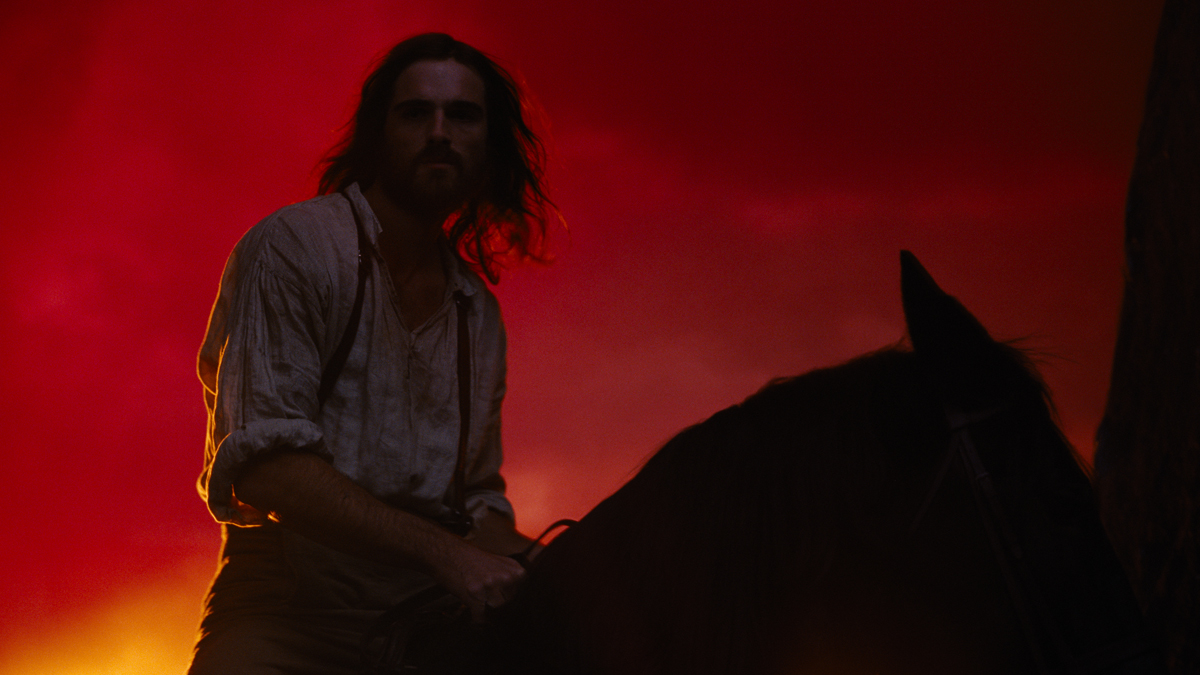
Jacob Elordi as Heathcliff in “Wuthering Heights.” Courtesy Warner Bros.
This painted scene does not appear in the novel, born instead of fantasy identification; it visualizes the unique and outsize hold Wuthering Heights exerts on the inner lives of its readers, how profoundly it still connects almost two hundred years later. Such engagement is exactly how art continues pulsing inside the lifeblood of a culture; a work’s greatness is partly measured by the ways subsequent generations of artist and writers, readers and thinkers, take it up, bring it forward, and refashion it in the present. These are the most generous terms with which to approach Emerald Fennell’s new film, “Wuthering Heights” (2026), styled with the quotation marks, she explains, to emphasize that it is her interpretation, of a book that means “so much.” Fennell’s film, like Balthus’s drawings and paintings, is a deeply personal wish fulfillment, and an exercise in wanting to be publicly seen within and through this novel.
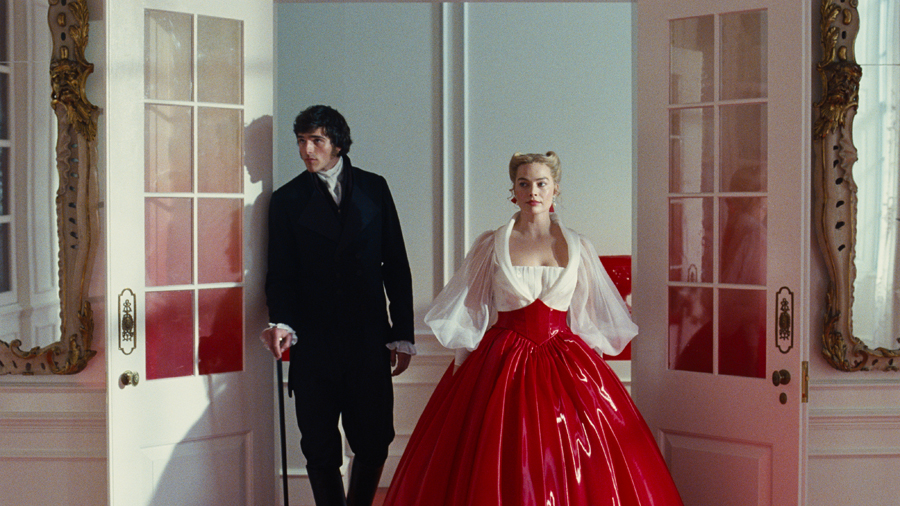
Jacob Elordi as Heathcliff and Margot Robbie as Catherine Earnshaw in “Wuthering Heights.” Courtesy Warner Bros. Pictures. © Warner Bros. Ent.
“Wuthering Heights” is the latest in a long series of film adaptations, almost all of which focus on the bond between Catherine and Heathcliff from childhood until her death in labor as a teenager (actors playing these parts are always cast too old). But that relationship constitutes less than half of the novel’s plot; commonly excised is the haunting continuation of the tale through the eventual marriage of their children (cousins, as C. and H.’s spouses are themselves brother and sister), which robs the story of both its grandeur and weirdness. What remains is a familiar scenario of star-crossed lovers struggling against the social and economic conditions that have kept them apart. Fennell’s directorial tendencies toward highly stylized savagery—her previous two movies are the bleakly comedic rape-revenge-fantasy Promising Young Woman (2020) and the sociopathic nightmare of ruling-class anxiety Saltburn (2023)—seemed poised to evade this Hollywood trap, exploring an icy brutality never adequately filmed before.
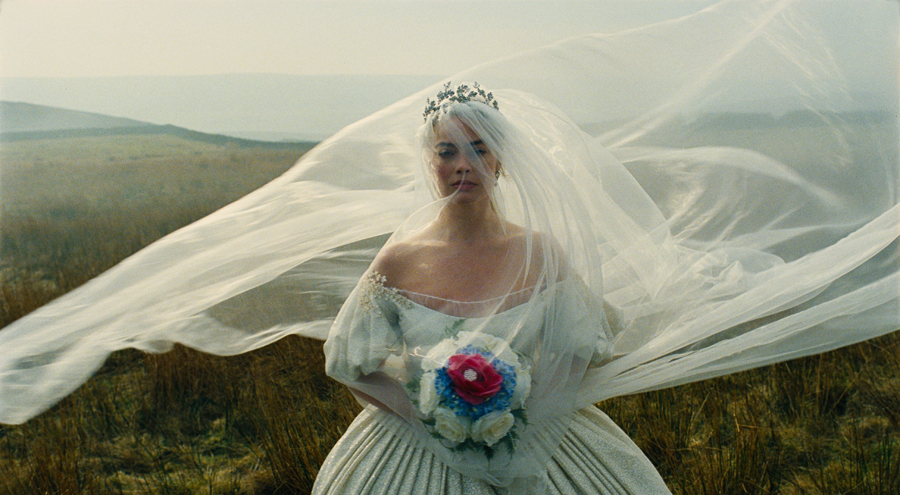
Margot Robbie as Catherine Earnshaw in “Wuthering Heights.” Courtesy Warner Bros. Pictures. © Warner Bros. Ent.
In interviews, Fennell cites Balthus’s images as early inspiration when she started working on her film, where we also have a blonde Catherine—no doubt for her own reasons—played by Margot Robbie, real-life friend and recurring collaborator. Aside from the names (Catherine, Heathcliff, Nelly, Edgar, Isabella), it is immediately apparent that very little remains of the novel at the level of characterization or incident. Events are collapsed and combined to an extent calculated to shock readers of the book; for example: turning Catherine’s gentle father into an abusive alcoholic gambler, thereby fusing him with the character of her brother, Hindley, who has been disappeared from the script; the “elevation” of Nelly, played by Hong Chau, perhaps the only kind human being in the lot, from a housekeeper to a lady’s companion and conniving villain. Audacious as they are, such alterations are perhaps necessary for condensing a complex text within the limits of a two-hour feature film.
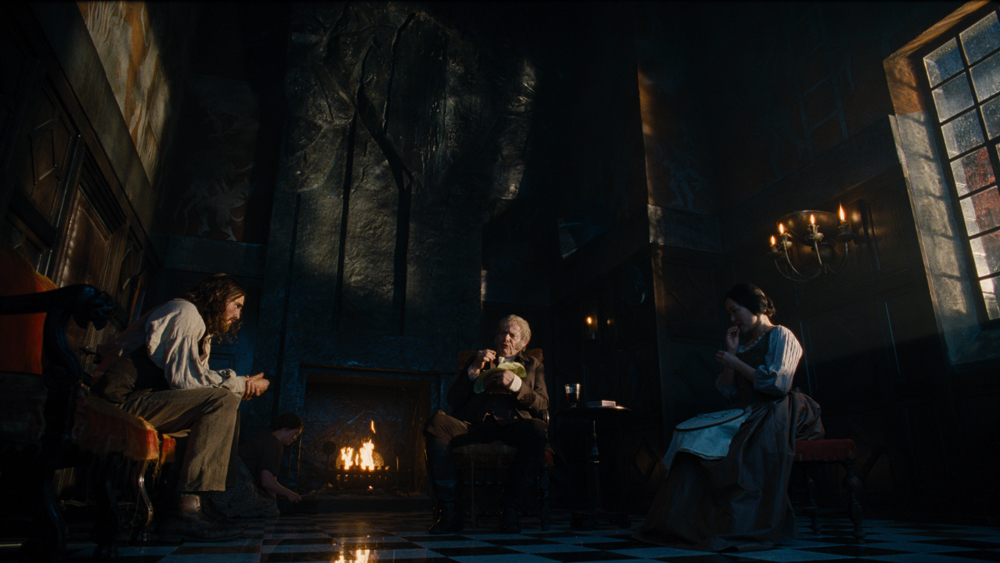
Jacob Elordi as Heathcliff, Martin Clunes as Mr. Earnshaw, and Hong Chau as Nelly Dean in “Wuthering Heights.” Courtesy Warner Bros. Pictures.
What is less intelligible is why all this distortion, juicing the sex and downplaying the violence, is executed in rendering Cathy and Heathcliff as utterly conventional lovers, albeit headstrong and annoying ones, having a regular old affair. After a prolonged montage of Heathcliff and Cathy fucking, the ending devolves into a soap-opera bathos so boring that I found myself rooting for Fennell to finally kill Cathy off. (Here, Cathy dies with a rotting baby in her womb; a blackish-red puddle issuing from her vagina soaks the ivory satin sheets). The most incisive and refreshing scenes revolve around Isabella Linton, played by Alison Oliver, changed from the younger sister of Cathy’s husband, Edgar, to being his “ward” (one can only guess to obscure the quasi-incestuousness of the double brother-and-sister-in-law couplings), who eventually marries Heathcliff, despite the fact he makes clear that he’ll never love her and promises to ruthlessly punish her.
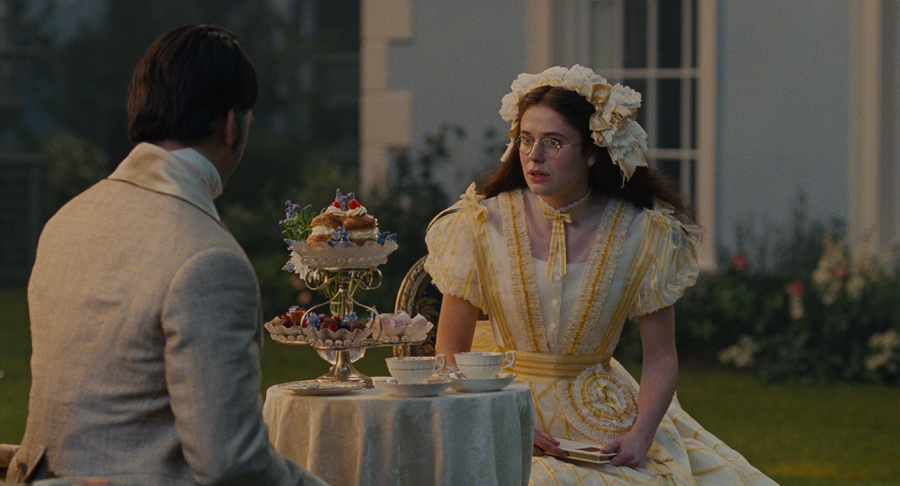
Shazad Latif as Edgar Linton and Alison Oliver as Isabella Linton in “Wuthering Heights.” Courtesy Warner Bros. Pictures.
In the novel, before Isabella defies her beloved brother and elopes with Heathcliff, her future groom hangs her dog with a handkerchief—a detail Fennell’s version, for all its will to shock, does not have the nerve to include, which is especially strange considering she begins her film with a public hanging, apropos of nothing, with its rigor-mortis hard-on an overdetermined symbol of sex and death. A suffocating strung-up dog is an extraordinary image, but one that would make Heathcliff far too monstrous to remain the rakish heartthrob embodied by Jacob Elordi (the almost painfully beautiful star of Saltburn). Oliver’s performance is funny, too, and perfectly captures the knife’s edge of innocence and delusion required to cast Heathcliff as hero of a bodice-ripper. The scene in which Isabella is collared, chained, and acting like a dog at Heathcliff’s feet is Fennell’s innovation, but one absolutely accurate to the spirit of the text. It makes me wish Fennell had made better use of such interpretive genius by sticking closer to the source material across the rest of the film, and in the process letting it become as relentless as Brontë’s vision.
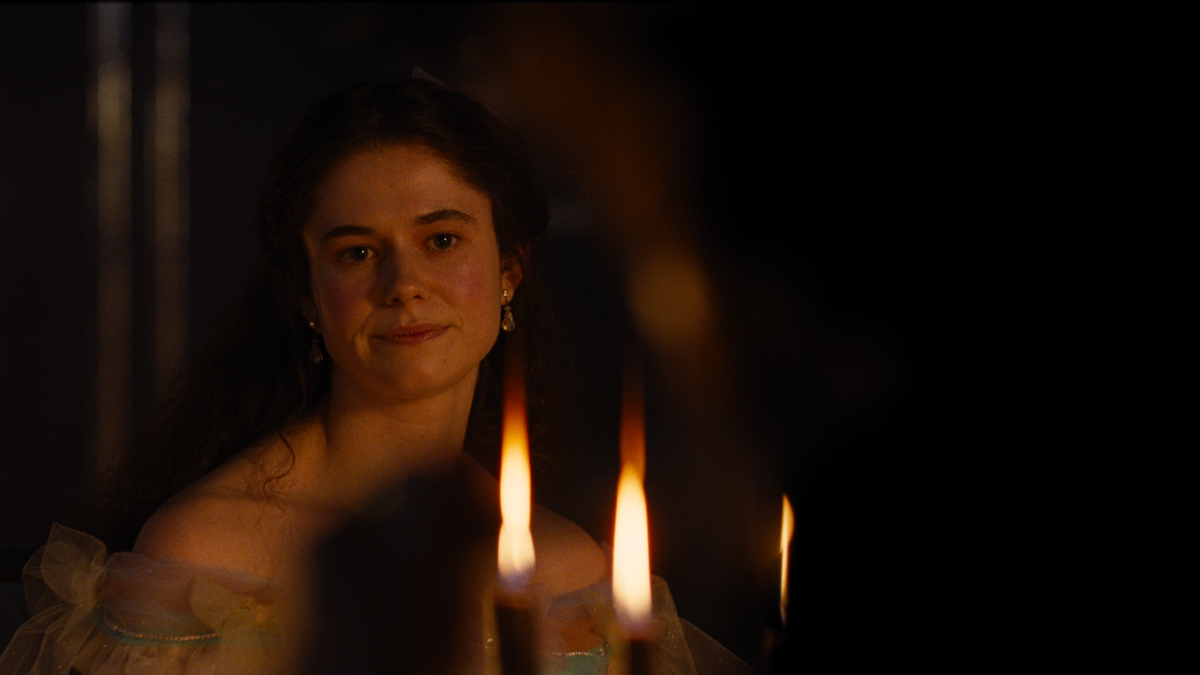
Alison Oliver as Isabella Linton in “Wuthering Heights.” Courtesy Warner Bros. Pictures. © Warner Bros. Ent.
In a 1987 essay on the book, feminist critic and activist Andrea Dworkin identifies Isabella as the embodiment of the “bad reader” of Wuthering Heights, as “the sentimental reader of romance novels when life, love, and art demand a confrontation with the politics of power. The bad reader romanticizes the sadist and reads the rapist, the abuser, the violent man, as a romantic hero: tortured himself, despite proof that he is the torturer.” And, unfortunately, it is precisely this “bad” reading that Fennell’s adaptation provides, marketed as “inspired by the greatest love story of all time” and released in time for Valentine’s Day. She correctly understands that the exact same film with a different title or character names would not have generated a fraction of the attention, setting “Wuthering Heights” up to be received as a transgression by those who love the novel and thus fueling the insane publicity that has presaged its release. Like Balthus painting himself as Heathcliff, Emerald Fennell has fashioned herself as a provocateur, a highly posed sadist-auteur who wants to be seen dominating a beloved object, destroying something precious by the very force of her love.
Jarrett Earnest is a writer, curator, and editor living in New York City. He is the host of Private Life, a podcast for the New York Review of Books, where he is also a frequent contributor. He is the author of What it Means to Write About Art (2018) and Valid Until Sunset (2023), as well contributor to many contemporary artists’ monographs, including Dana Schutz, Sam McKinniss, Roni Horn, and Raymond Saunders.