


 Andrew Chan
Aliens are among us: in Steven Spielberg’s latest film, the truth is out there—and on our screens.
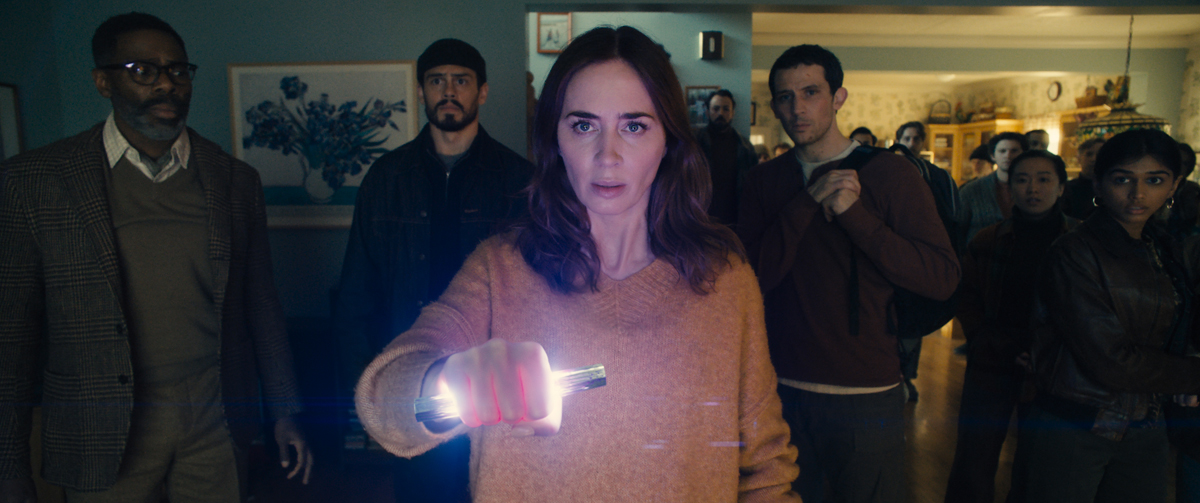
Colman Domingo as Hugo Wakefield, Tommy Martinez as Santiago, Emily Blunt as Margaret Fairchild, and Josh O’Connor as Dr. Daniel Kellner in Disclosure Day. Photo: Universal Pictures and Amblin Entertainment. © Universal Studios.
Disclosure Day, directed by Steven Spielberg,
now playing in theaters
• • •
Spectacle has always been Steven Spielberg’s primary idiom, the language in which he expresses himself most naturally. As a precocious teenager dreaming up ambitious 8mm projects, the director idolized maestros of grand-scale cinema like David Lean and Cecil B. DeMille, and his earliest works showed a penchant for dazzling audiences with the flashiest tools of his trade. Even as he matured as a filmmaker and his concerns began to move toward matters of grim global consequence—from the historic atrocities depicted in Schindler’s List (1993) and Amistad (1997) to the dystopian fears of technology and surveillance in A.I. Artificial Intelligence (2001) and Minority Report (2002)—Spielberg remained steadfast in his conviction that his ostentatious style need not result in mere escapism. It could activate people’s capacity for innocence and awe—and bring them closer to one another. Running parallel to his faith in movies is an equally earnest belief that something bigger than us is out there, a galactic life force that might elicit our terror while also giving us back our dignity.
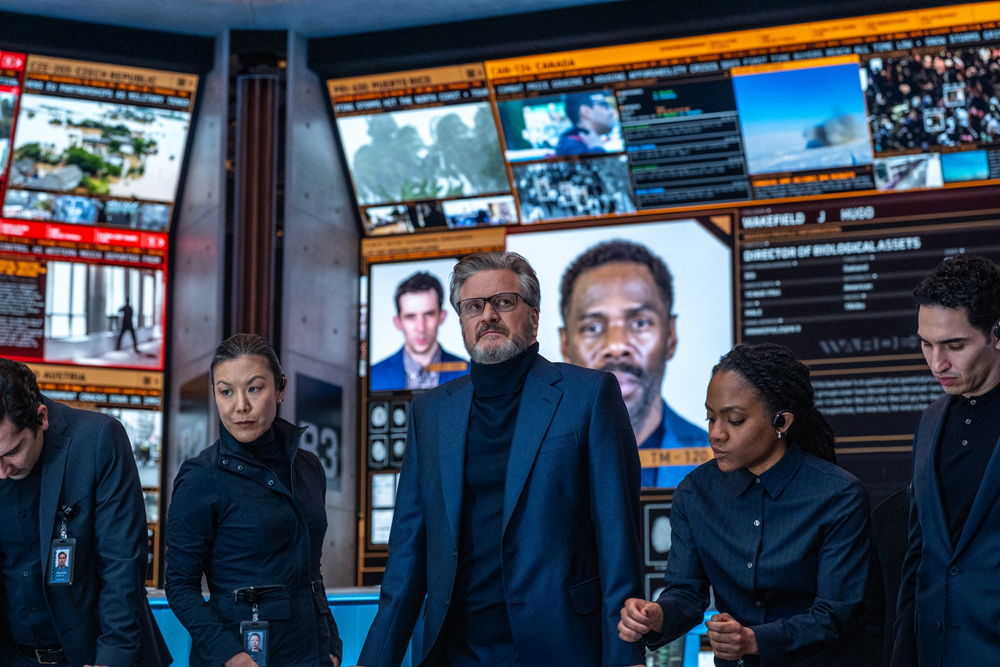
Colin Firth as Noah Scanlon (center) in Disclosure Day. Photo: Niko Tavernise / Universal Pictures and Amblin Entertainment. © Universal Studios.
In Spielberg’s latest rendezvous with that mysterious something, the connection between these two core ideas is more explicit than ever. Disclosure Day takes place in an America awash in screens, whose malignant powers of distortion and distraction are ultimately outweighed by their ability to disseminate the truth at mass scale. The film shows a world descending into war and hysteria and posits the revelation that aliens are among us as the only bombshell galvanizing enough to restore the screen’s monocultural function as a purveyor of shared reality. Unlike in other Spielberg movies that tread similar ground, like Close Encounters of the Third Kind (1977), the extraterrestrials in Disclosure Day appear primarily as subjects captured in archival footage and rarely as figures in the diegetic world. They exist in a symbiotic relationship with the moving image, as if they had waited for its invention before making their earthly visit. Just as they confer spiritual value on the technology that documents them, they rely on it to turn their presence into a meaningful event.
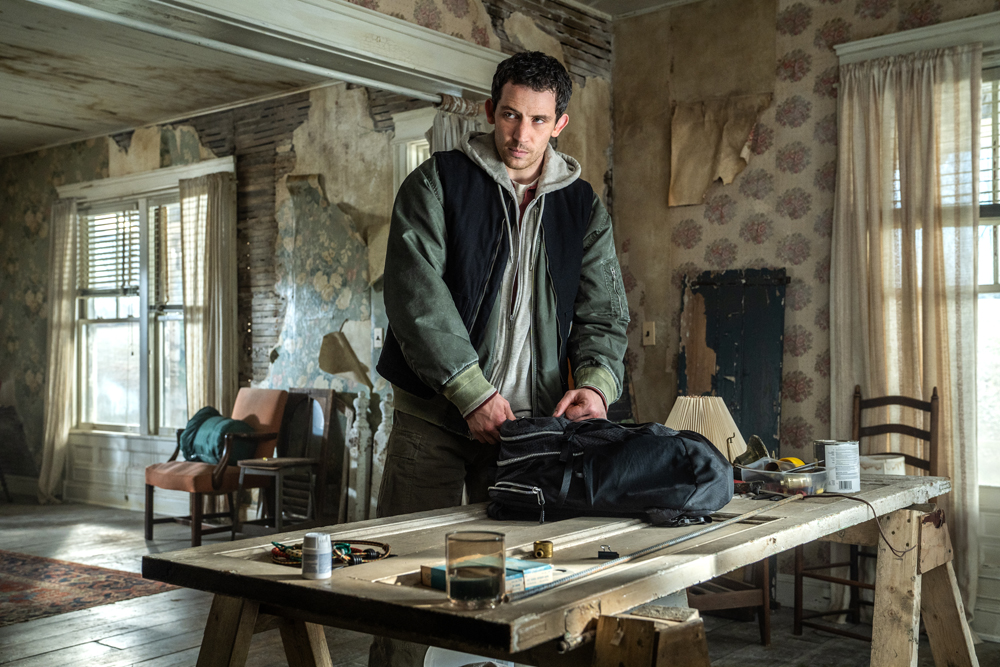
Josh O’Connor as Dr. Daniel Kellner in Disclosure Day. Photo: Niko Tavernise / Universal Pictures and Amblin Entertainment. © Universal Studios.
At the center of Disclosure Day is an Edward Snowden–like renegade named Daniel Kellner (Josh O’Connor), a cybersecurity expert intent on giving the aliens their screen debut. Daniel used to work at a shadowy corporation called WARDEX and has since stolen some of its top-secret holdings: a trove of evidence of UFO visitations (as well as videos of the capture and torture of extraterrestrials) that the US government has tasked the company with concealing from the public. Overseen by a group of like-minded defectors led by the righteous and even-keeled Hugo (Colman Domingo), the theft sends Daniel into hiding at a remote farmhouse with his girlfriend, Jane (Eve Hewson), a former nun-in-training who initially doubts the wisdom of this mission. At the same time, Daniel is on a collision course with Kansas City meteorologist Margaret Fairchild (Emily Blunt), who has been suddenly granted clairvoyant powers and has just gone viral for an uncontrollable fit of glossolalia on live television.
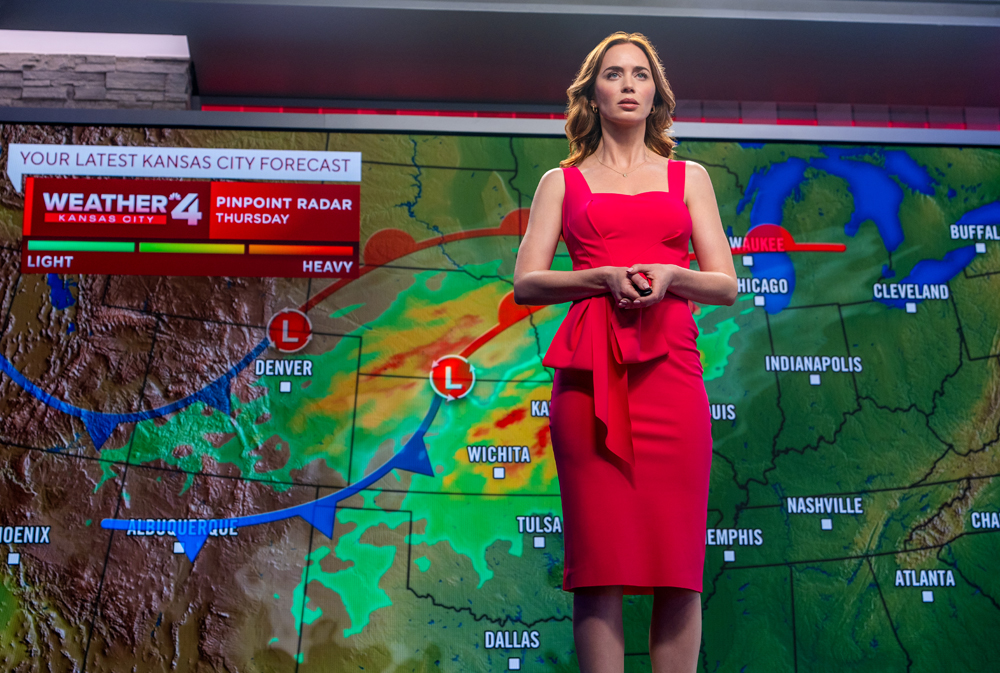
Emily Blunt as Margaret Fairchild in Disclosure Day. Photo: Niko Tavernise / Universal Pictures and Amblin Entertainment. © Universal Studios.
Conceived by Spielberg and scripted by his frequent collaborator David Koepp, the story tumbles along chaotically, leaving behind a trail of references to signature moments in the director’s career. Some of these allusions will be easy to catch for anyone well-acquainted with the Spielberg oeuvre: one of the movie’s most satisfying action set pieces, for instance, harks back to a chase sequence in his first commercial feature, Duel (1971). Other details resonate more intimately: one shot that shows a character’s violent loss of identity reflected in the blade of a knife calls to mind Spielberg’s childhood love for a similar image in Lean’s Lawrence of Arabia (1962), while the contrast between math-wiz Daniel and empath Margaret echoes what the director has said over the years about his own parents’ divergent temperaments. As much as Disclosure Day’s sci-fi trappings gesture toward the future, the movie is more obviously animated by a preoccupation with the good old days. When Jane argues that Daniel’s quest to leak WARDEX’s files risks turning a God-fearing society upside down, she seems to be talking about a far less secular country than the one we now inhabit. And in the final scene, as the sprawling cast of characters converges at Margaret’s TV station, it’s hard not to swoon with nostalgia for a time when local news media was not so threatened with obsolescence.
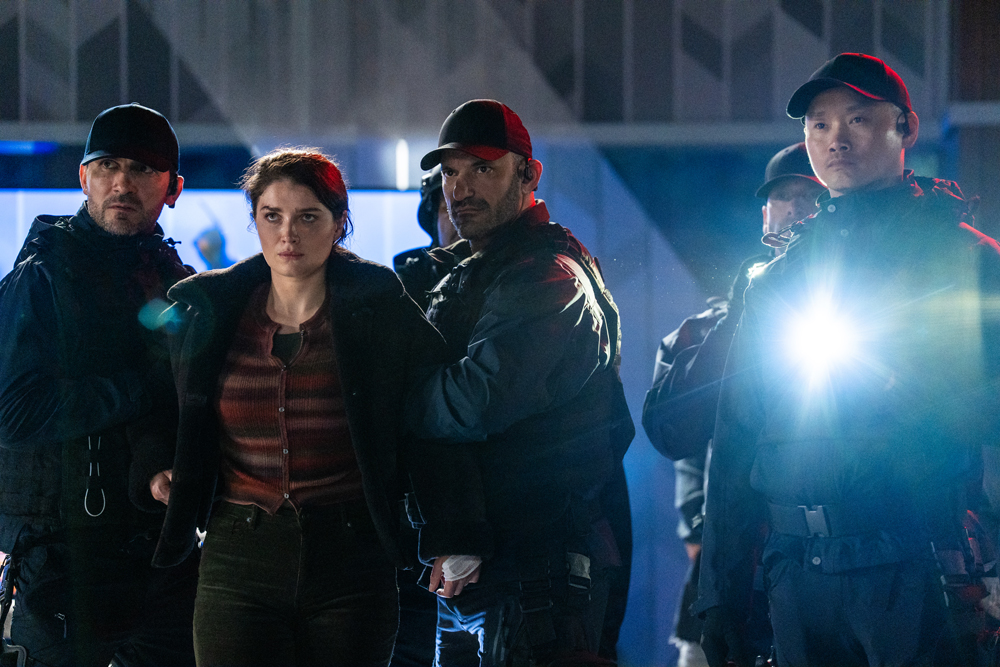
Eve Hewson as Jane Blankenship (second from left) in Disclosure Day. Photo: Niko Tavernise / Universal Pictures and Amblin Entertainment. © Universal Studios.
These nods to the past are densely layered and occasionally poignant, but they can’t compensate for the film’s ultimate pointlessness. All of Spielberg’s previous movies about interplanetary encounters rank among his greatest works, partly because the subject tends to inspire in him a laser-like focus: in E.T. the Extra-Terrestrial (1982), the young protagonist’s friendship with an alien stranded on Earth points directly to the loneliness of the boy’s family life, while in the invigoratingly bleak masterpiece War of the Worlds (2005), malevolent aliens reduce a working-class-father hero to a vector of instinct and brute survival. Disclosure Day departs from the narrative simplicity of those films, and from the emotionally charged domestic milieus that anchored them. Instead, it assumes an antic, pell-mell energy that, despite the intermittently cohering efforts of cinematographer Janusz Kamiński and composer John Williams, often has the effect of scribbles on a notepad.
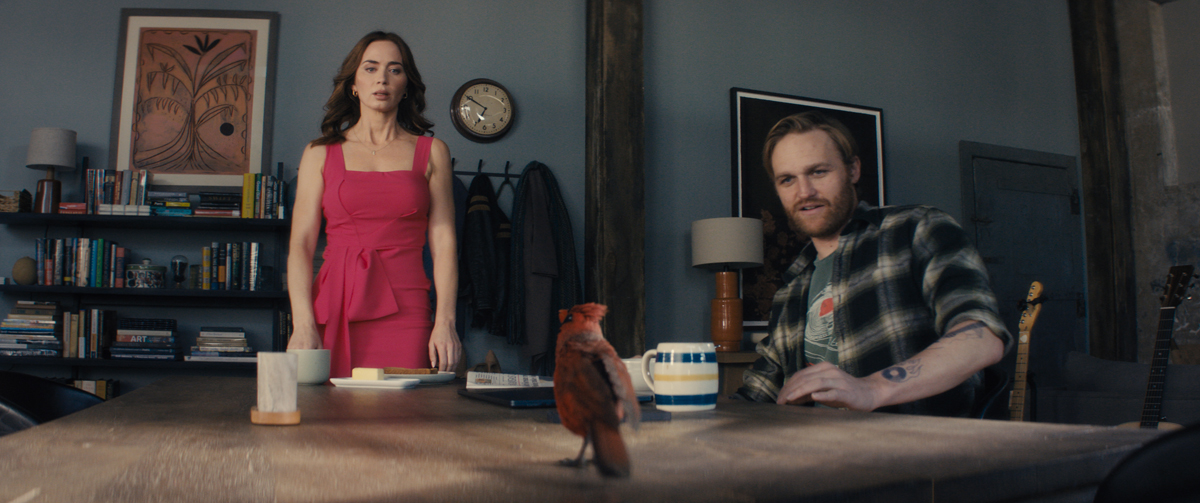
Emily Blunt as Margaret Fairchild and Wyatt Russell as Jackson in Disclosure Day. Photo: Universal Pictures and Amblin Entertainment. © Universal Studios.
It’s no crime to play fast and loose with logic in a sci-fi movie. But several of Disclosure Day’s more preposterous ideas feel like shortcuts rather than flights of unfettered imagination. The aliens typically take on the guise of (shoddily CGI-ed) fauna, and in one of the film’s many cumbersome bits of verbal exposition, we are told they do this so as not to scare us humans. Yet, unlike in Denis Villeneuve’s more judiciously constructed Arrival (2016), we are given no clue about what motivates these visitors. Meanwhile, the various mind-control mechanisms found in the film—including a cheap-looking metallic oblong that allows its owner to possess other people, as well as the rapid-fire psychic readings that Margaret uses to disarm her foes—render the movement from one plot point to another all too easy.
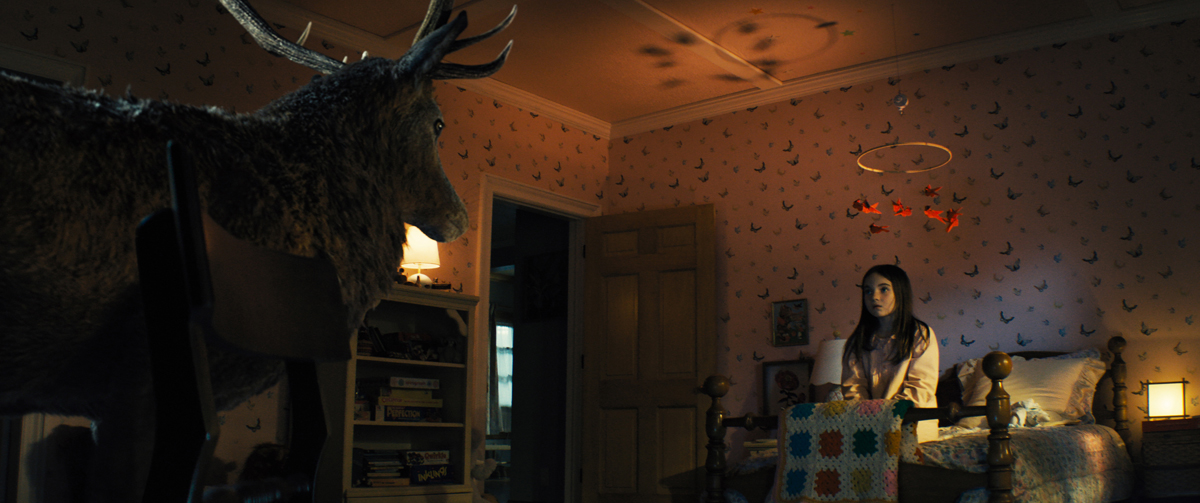
Delaney Anne Cuthbert as young Margaret in Disclosure Day. Photo: Universal Pictures and Amblin Entertainment. © Universal Studios.
These uninspired ideas prevent us from appreciating the characters—some of whom are endearing, but all of whom suffer from a cartoonish flatness—or the valiant teamwork that leads to the climactic leak. No living director is more skilled than Spielberg at dramatizing the childlike feeling of being lost in an incomprehensible world. But here, he inadvertently demonstrates that, in order to take us across fearsome terrain, a filmmaker should first get to higher ground and perceive it more clearly than we can.
Andrew Chan is a writer and editor living in Brooklyn, New York. He is the author of Why Mariah Carey Matters, published by University of Texas Press.