


 Beatrice Loayza
In a new retrospective series at Anthology, an indelible actress whose story remains full of ellipses.
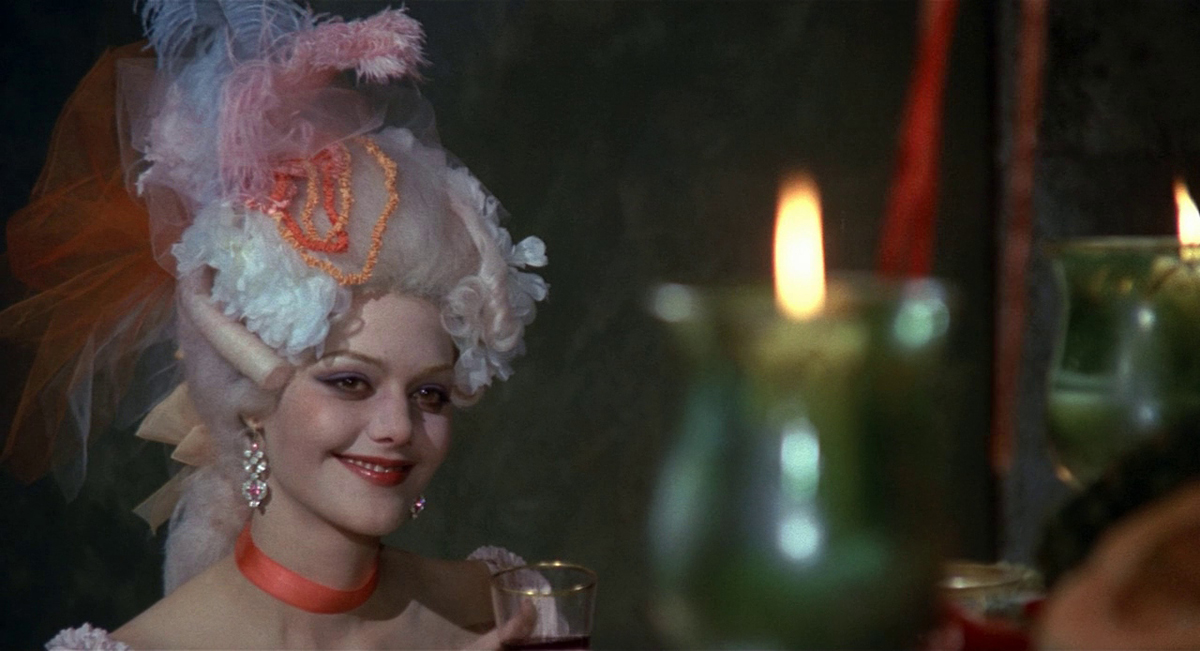
Tina Aumont as Henriette in Fellini’s Casanova. © Universal.
“La fille des étoiles: Tina Aumont,” Anthology Film Archives, 32 Second Avenue, New York City, April 17–30, 2026, programmed by Nina Verneret
• • •
When Tina Aumont appears in Fellini’s Casanova (1976) as Henriette, the coy maiden of the title libertine’s dreams, she keeps her identity secret, frustrating the curiosity of her suitors with a toothy smile, a puckish gaze. She’d rather make love than talk about herself, though the hero (Donald Sutherland) can’t help but wonder: How did she end up with her last lover, a Hungarian aristocrat twice her age? She plays the cello like a virtuoso, but when did she learn? Where? A single night of rapturous lovemaking is all Casanova gets before Henriette flees, returning to whichever faraway kingdom she must have escaped from. She remains forever unknowable, yet her face is indelible, impressed upon the brain for eternity. Our knowledge of Aumont is much the same: all we get are images. Her story is full of ellipses.
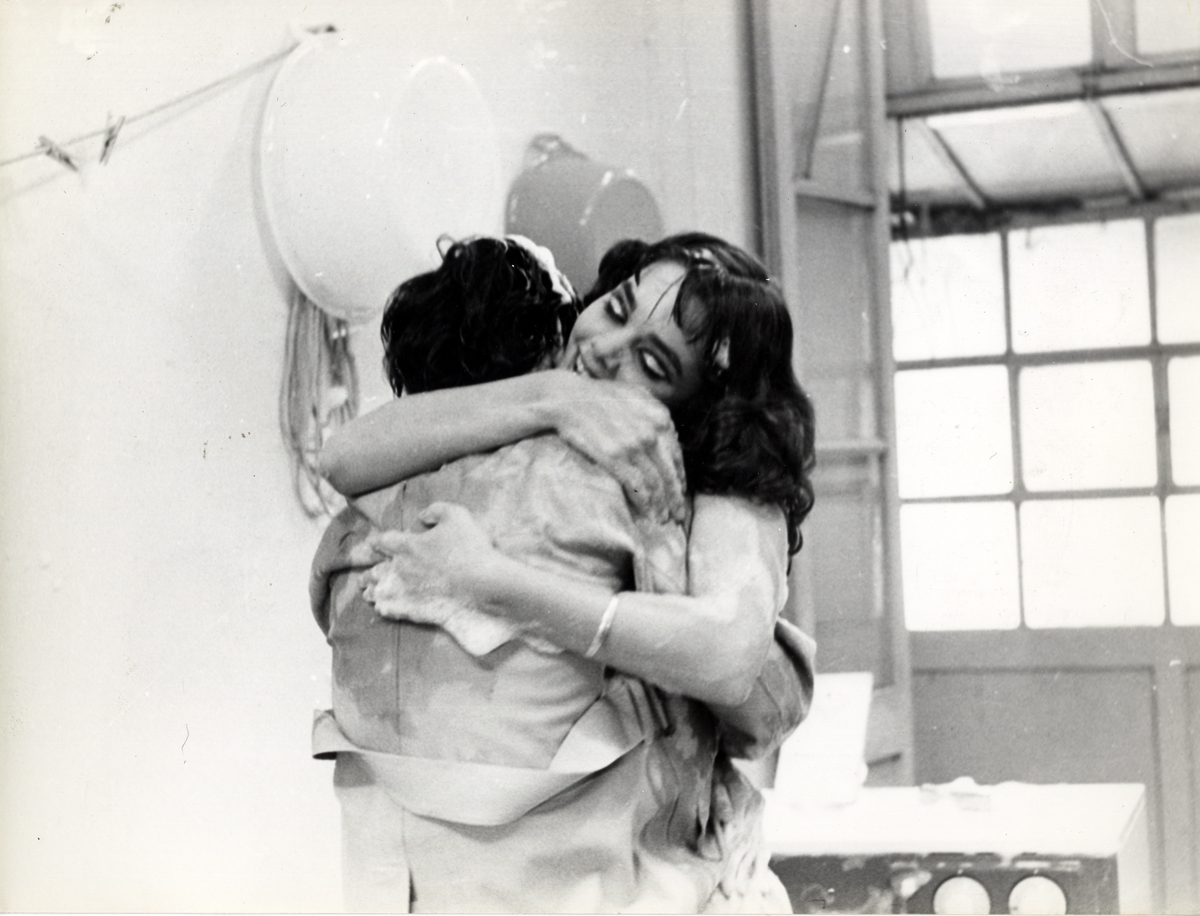
Pierre Clémenti as Giacobbe and Tina Aumont as the detergent salesgirl in Partner. © Cinecitta.
It was widely known that Aumont suffered from a serious drug problem for large portions of her adult life, and arguably the mere stigma of being an addict cost her just as much work as the actual baggage she brought to set. Films by Fellini, Bernardo Bertolucci, and Philippe Garrel fill out her résumé, yet her addiction thwarted her career and made her a marginal hire. She was replaced by Trish Van Devere in Richard Fleischer’s The Last Run (1971), and her scenes were cut from Catherine Breillat’s Dirty Like an Angel (1991). Director Jacques Richard had used fussy orthochromatic film to shoot his second feature, Le rouge de Chine (1977), but when he examined the footage, the scenes with Aumont, who had played a supporting part, came out completely black. The universe, it seems, always conspired to blot her out, no matter her dazzling origins.
Arriving on Valentine’s Day, 1946, in Hollywood, Tina—née Maria Christina—Aumont was the only child born of the union between the Queen of Technicolor, Maria Montez, and the matinee idol turned French Resistance hero Jean-Pierre Aumont. Jean Cocteau, who had launched her father’s career by casting him in his 1934 play The Infernal Machine, dubbed baby Tina “la fille aux étoiles”—the girl with the stars, which the upcoming Anthology Film Archives retrospective dedicated to Aumont reworks as its own title. Ironic, this moniker, considering not just her obscurity today but also the sorrows that trailed her like a shadow, beginning with the unexpected death of her mother, who suffered a fatal heart attack in 1951. The chaos continued. At only seventeen, Aumont abandoned her studies and married the thirtysomething actor Christian Marquand. She got pregnant but lost the baby during childbirth, then promptly fled to Paris and threw herself into the ’60s counterculture. She dropped acid with the Rolling Stones and made groovy home movies in the Mediterranean chateau of the painter Frédéric Pardo, her lover. Her acting debut came courtesy of Joseph Losey’s cheeky spy spoof Modesty Blaise (1966), though, as a peripheral magician’s assistant, she only throws a few frisky glances at the camera before fulfilling her brief role as one of Terence Stamp’s conquests.
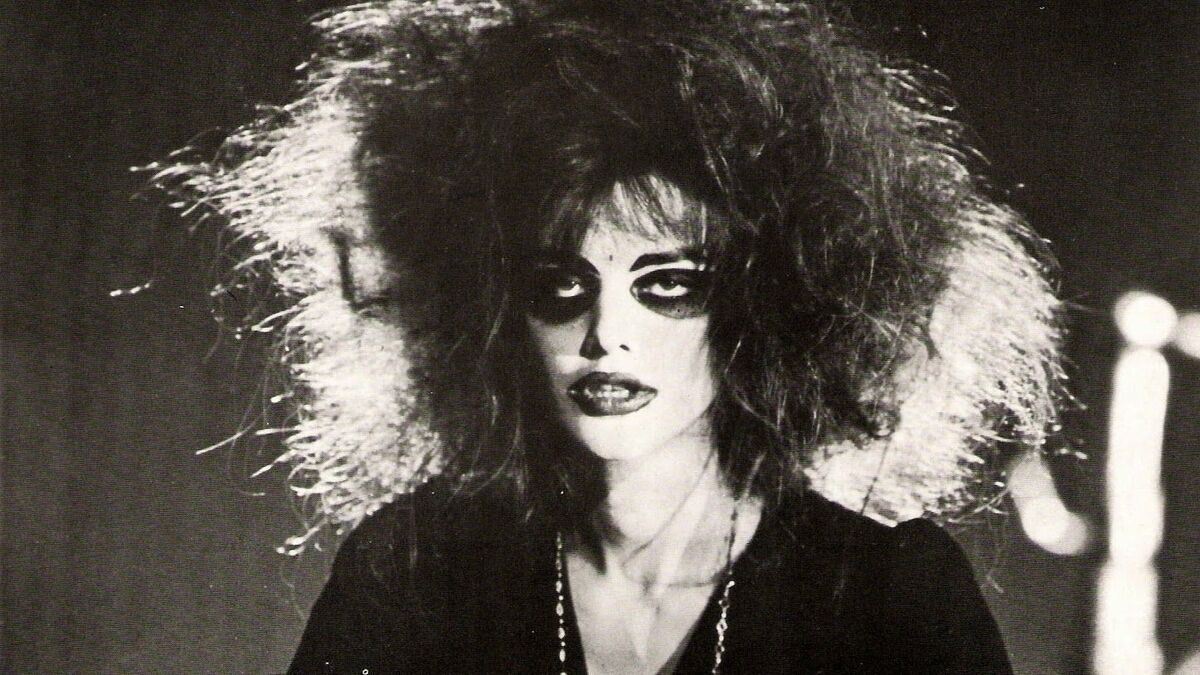
Tina Aumont as Anita in L’urlo (The Howl). © Rialto Pictures.
Aumont didn’t mind playing the sexpot. Her style relied on embracing her sensuality, which was openly coquettish and laced with the kind of faux innocence that created a sense of mischief. With her heavy brow and kohl-rimmed eyes, her look could easily turn manic, deviant, making her a precursor of the likes of Béatrice Dalle and Asia Argento, tempestuous brunettes who also thrived in B movies and the seedier pockets of the art house. Aumont’s breakout role, if it could be called that, was in Tinto Brass’s L’urlo (1970), a frenzied jam-session of a film based on Allen Ginsberg’s Howl, in which Aumont plays a runaway bride who encounters orgies, hippie cannibals, talking animals, and state violence. She dies, in the end, while seemingly en route to reunite with her groom, her face caked in funereal white makeup as she releases a primal scream from an open-top convertible before crashing. “A beautiful girl,” murmurs an acquaintance, “intelligent but nuts.”
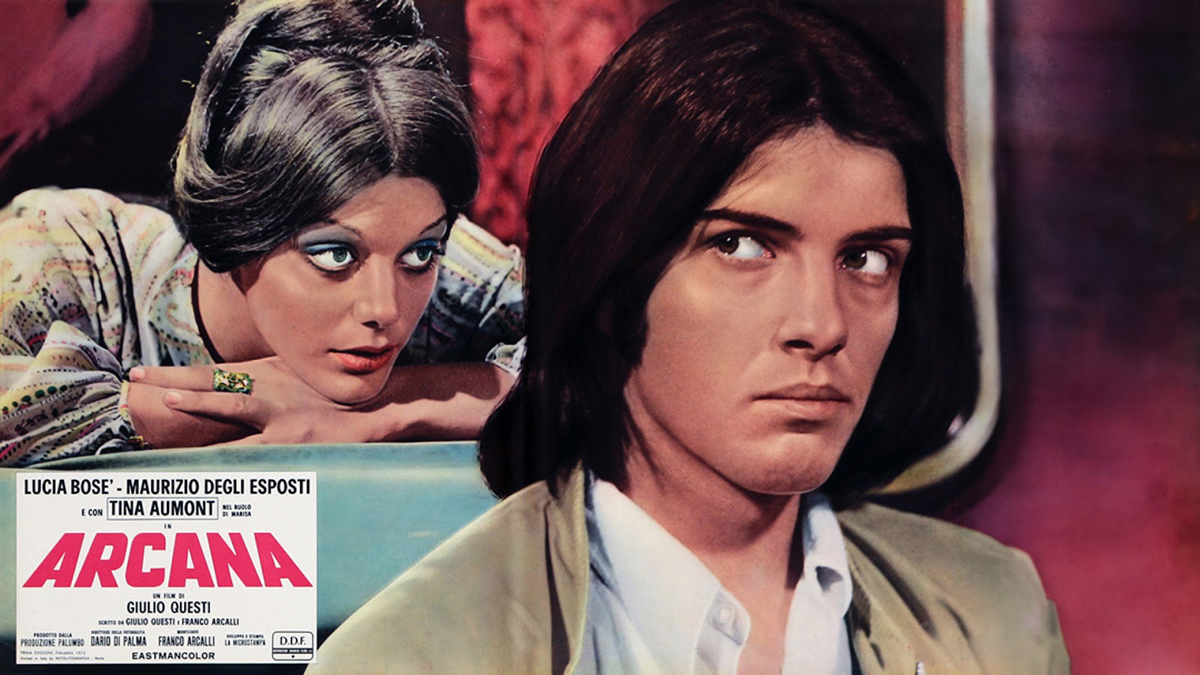
Tina Aumont as Marisa and Maurizio Degli Esposti as the son in Arcana movie poster. Courtesy Anthology Film Archives.
At the end of the ’60s, Aumont moved to Rome, where she became known as a performer with a predilection for provocation, having starred not only in Fellini’s take on Casanova but also Luigi Comencini’s 1969 version, too, as well as Gian Luigi Polidoro’s ultra-low-budget Satyricon, aka The Degenerates (1969). She gets chopped up in Sergio Martino’s Torso (1973), raped by a proto-incel with supernatural powers in Giulio Questi’s Arcana (1972), and is encouraged to indulge in some same-sex canoodling in the exploitation titles Salon Kitty and The Nude Princess, both from 1976. In 1978, her career began its decline when she returned to Paris after being deported from Italy for smuggling opium from Thailand in mini Buddha statuettes, recalling the jail sentence that her close friend and costar Pierre Clémenti—they both appeared in Bertolucci’s Partner (1969) and Garrel’s The Virgin’s Bed (1969)—received in 1972 for drug possession.
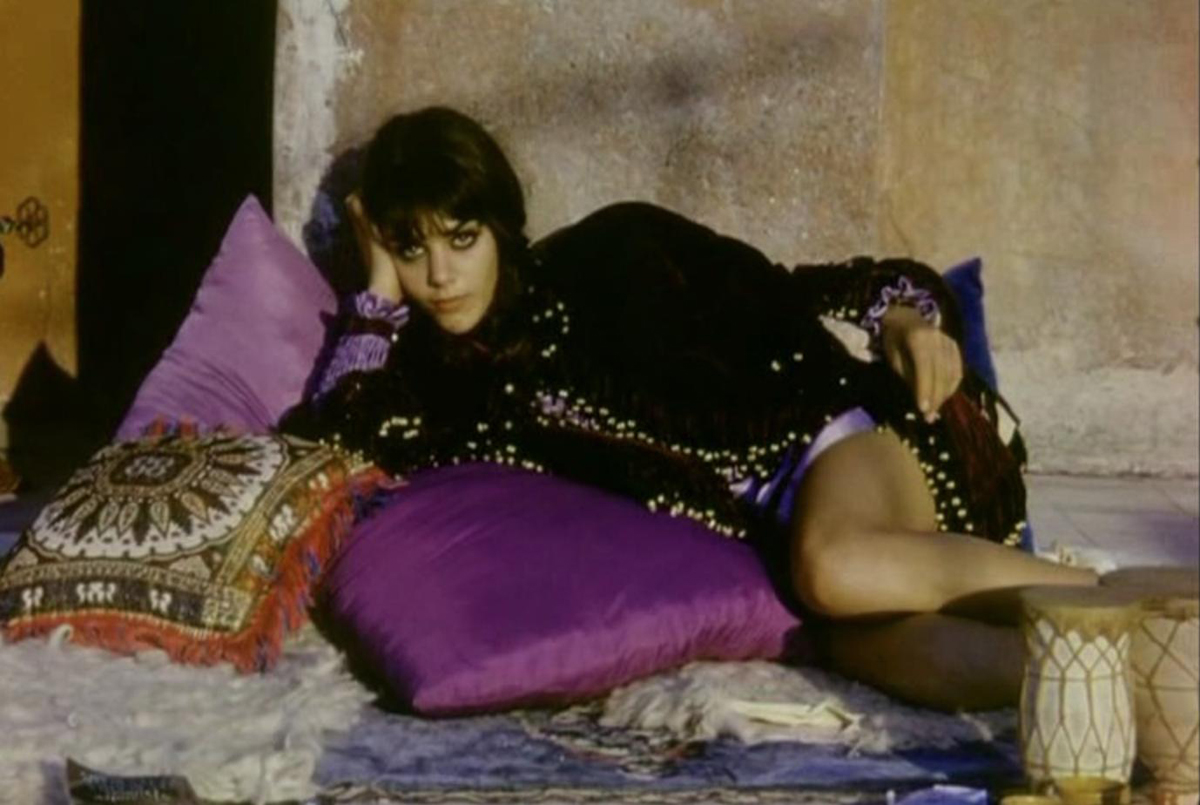
Tina Aumont as the prisoner in Le lit de la vierge (The Virgin’s Bed). © The Film Desk.
Aumont and Clémenti had been emblems of the French underground and May 1968 youth culture, but with the passing of that decade’s upheavals and the commercialization of bohemianism, things changed. Heroin and cocaine overtook LSD as the hedonist’s substance of choice, and Aumont tumbled under their influence. As with her contemporary Maria Schneider, the ’80s proved destructive years, though Aumont, seasoned partier that she was, also became a sparkling fixture of Parisian nightlife, at one point crowned by Alain Pacadis (France’s response to Hunter S. Thompson) as one of the “queens” of the legendary discothèque Le Palace.
Aumont died in 2006 of a pulmonary embolism, a lung condition with higher risks for people with histories of drug abuse. She was broke throughout the last decade or so of her life and had been living on welfare. But if we’re inclined to read her story as strictly tragedy, that’s perhaps because her absence is so strongly felt. Her mysteries assume an unbearable weight—yet would a longer time in the spotlight, a more robust filmography, have brought her closer to us?
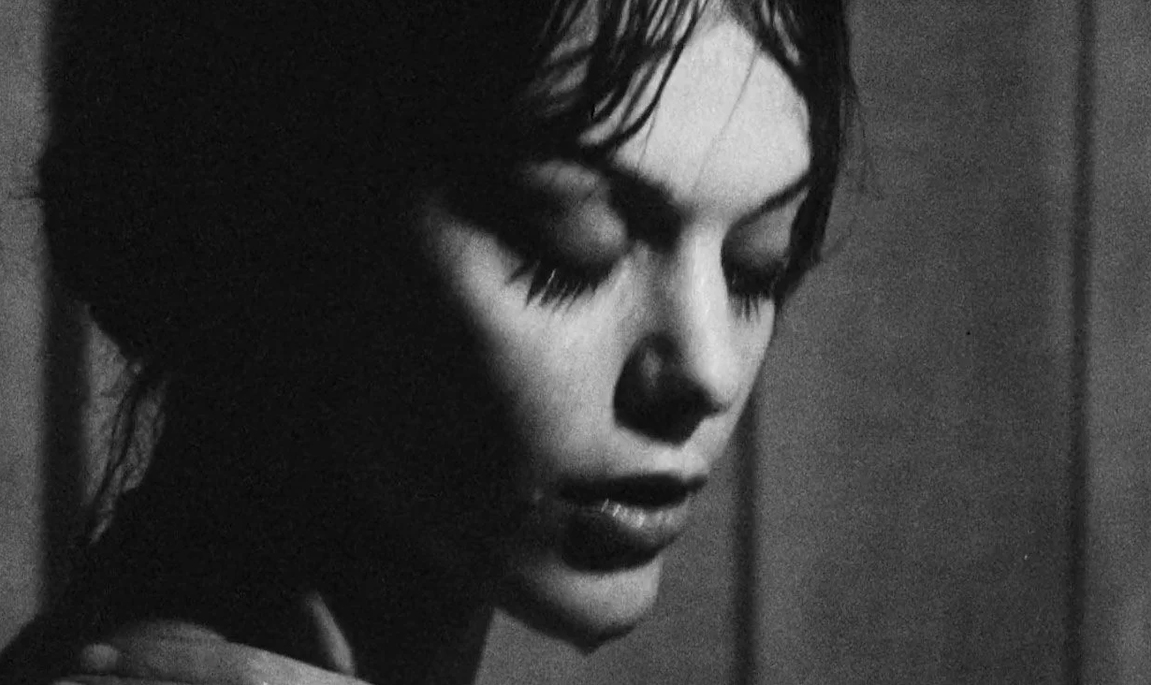
Tina Aumont in Les hautes solitudes. © The Film Desk.
In Garrel’s Les hautes solitudes (1974), which he once described as composed of “outtakes” from a nonexistent film, Aumont plays the foil to Jean Seberg’s melancholic lead; she is fidgety, flirty, a pinch wicked, though ultimately fragile beneath it all. Yet this is only conjecture. We can’t be sure about anything, because the film is silent and devoid of a narrative—it’s merely a collection of the faces of Seberg and Aumont (and, briefly, Nico, Garrel’s then-partner) in close-up. Inspired by Warhol’s Screen Tests, Garrel, a member of the avant-garde film collective the Zanzibar Group (around which Pardo and Clémenti also circulated), had wanted to make a film about pure presence whose details could be filled out by the viewer’s imagination. Only with the passage of time would Les hautes solitudes also become about phantoms and trying but inevitably failing to grasp the truths of three women shrouded in the fog of scandal and sickness. But I’m not sure whether Aumont would have embraced such a grim interpretation. In interviews conducted in the final years of her life for the 2006 book Égéries sixties (Sixties Muses), Aumont acknowledges the horrors of her drug dependency even as she refuses to renounce the life it gave her, describing her experiences as both transcendent and illuminating: “I regret nothing.”
Beatrice Loayza is a writer and editor who contributes regularly to the New York Times, the Criterion Collection, Film Comment, the Nation, and other publications.