


 Zack Hatfield
Awkward parties, dreary bars, rudderless female narrator: Gwendoline Riley’s latest is a delicate novel about love, friendship, and contempt.
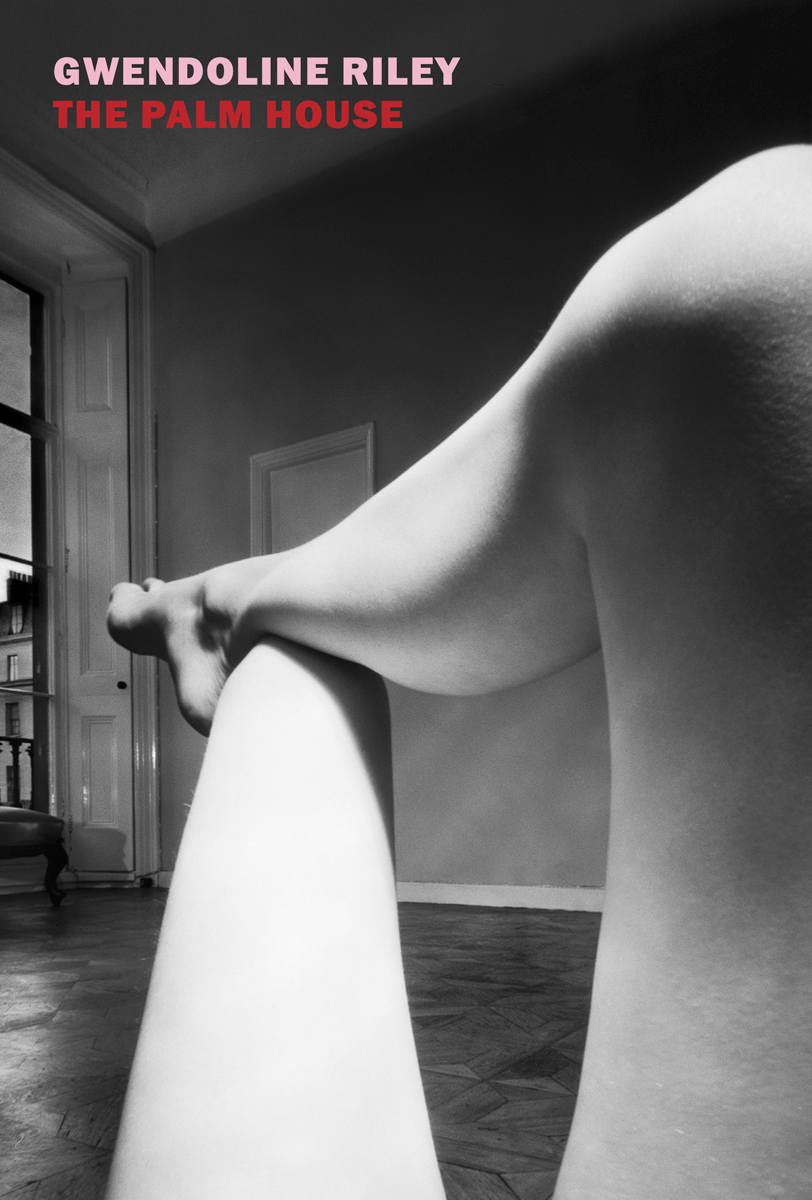
The Palm House, by Gwendoline Riley,
New York Review Books, 211 pages, $16.95
• • •
In The Palm House, Gwendoline Riley takes a page from Dickens—specifically, the first page of Bleak House—and immediately drops us in a London cloaked in strange fog, gloomy vapors scudding over the Thames, the streetlamps clicking on early. Here, though, it’s technically not fog, but sand, from when 2017’s Hurricane Ophelia whipped North African dust and smoke northward, casting the London skies an eerie yellow, “like iodine.” Amid this dystopian pea-souper, Laura Miller and Edmund Putnam wet their worries at a pub on the South Bank. Putnam informs Laura, the narrator, that the haze is “Saharan sand” that’s “deflecting the shortwave light.” She replies that she hadn’t noticed it. “ ‘Well, it’s a storm now,’ said Putnam. ‘Was a storm.’ ”
“Never open a book with weather,” counseled Elmore Leonard in his famous list of advice for writers (it’s rule number one). Riley, among the best contemporary novelists working today, gets a pass. Her eighth book is a lot like her others: dreary bars; awkward parties; a stoic, rudderless female narrator from the Wirral with a bad mother and a worse father. This one is a delicate and autumnal novel, pared-back yet bristling with quiet tangents, about the mysteries of friendship and what it means to find yourself becoming history. To Laura and Putnam, every street corner seems to evoke a memory from lost youth; even the weather is past tense. Their London is a defective snow globe, aswirl with sepia clouds.
Putnam is a burnt-out case. This year has seen the deaths of both his father and his mentor, the editor in chief of Sequence, the legacy magazine (shades of the New Statesman and the Times Literary Supplement) he’s worked at for twenty-five years. After the board installs an oafish young outsider called “Shove” to the top of the masthead—a perch from which he aspires to remake Sequence into a “London version of the New Yorker”—Putnam resigns in protest. He lives alone with his cat, Cat, nursing resentments and obscure antagonisms (and looking after the girl-next-door’s garden), wont to phrases like “Ah, the passing of time!” Also, his eczema is back. Laura, nine years Putnam’s junior, at forty, has published only three pieces with Sequence over the last two decades, but regularly attends their weekly staff drinks, keeping up with the palace intrigue. She’s made it her task to see Putnam through his breakdown. The book alternates between their conversations and a nonlinear series of vignettes from her life.
Riley’s debut, Cold Water (2002), was published to acclaim when the author was twenty-two, but she really found her stride with First Love (2017) and My Phantoms (2021). Published in the United States by New York Review Books and clad in Jean Cooke’s elegantly disheveled paintings, these brief, claustrophobic tales established her reputation as a master portraitist of toxic relationships, one who leavens scenes of squirmy dysfunction with a nigh Wodehousian comic timing.
Following those novels, The Palm House might be said to complete an unofficial trilogy about the corrosive powers of love and the comforts of contempt; call it Kinds of Unkindness. Like Edwyn, the vituperative older spouse of First Love, and Hen, the flighty, inconsolable mother of My Phantoms, Putnam derives authority from his own helplessness, finding relief only in the exaggeration of his misery. These characters are scathing but often tender, capable of turning on a dime (or sixpence) on the narrator.
The reader’s sympathies may lie with that narrator, but they probably won’t sit still. Just as Hen could be endearing in her pitiful attempts to connect, Putnam’s sense of himself as a catastrophically misunderstood failure is oddly winning. “His face, I discovered, did not then look at all resigned or rueful or sigh-some,” Laura observes. “This was a face you might see on a storm-swung pub sign: eyes agleam with ancient, pagan malice.”
Laura’s story is mostly backstory: a dispiriting holiday taken with her mother and grandmother in Dubrovnik at age fourteen, a series of encounters a year later with a comedian named Chris Patrick, a more recent fling with a sleazy actor named Lawrence Wells. Are these the most significant things that have happened in her life? It’s unclear. When we read of Chris—a man with crinkly eyes and a habit of breaking into a cartoonish Cockney accent—sexually assaulting her, the memory isn’t meant to explain away her psychology, to complete her, as in a standard trauma plot; it’s narrated in the same cool tone as her other recollections, be it a palm reader curing her hand warts in Croatia or having to resort to smoker’s toothpaste at Lawrence’s crumbling mansion.
Riley’s protagonists bear some resemblance to Faye, the cipher-like narrator of Rachel Cusk’s Outline trilogy (2014–18), a saga mostly told through encounters with various strangers. Both writers conjure gimlet-eyed women who keep the reader at arm’s length, and who find themselves captive audiences to people who talk at them, rather than to them. Both writers are considered connoisseurs of “cruelty.” But whereas Cusk’s chatterboxes hold forth in unbroken monologues, Riley’s characters tend to reveal themselves in throwaway scraps of speech, in verbal tics and petulant repetitions (Chris’s “Giz a squeeze”; Lawrence’s puerile “Shan’t!”). One of Riley’s subtle signatures is to pile up a character’s dialogue as single, unanswered sentences—he said, he said, he said—as though the person were talking to themselves.
Together, the voices in Cusk’s triptych form a sort of Homeric epic about the porosity of the self and the amorality of art. There is a sense that these people are walking and talking Literature, whether they know it or not. In Riley’s books, the limitations of the novel are also tested. Recall the flurry of texts Hen sends her daughter after receiving a copy of Elena Ferrante’s My Brilliant Friend: “I don’t know who anyone is! :( / Is Lenu Lina or is Lena Lulu? Argh! / V confused. Too many names. Argh! / Still waiting for ‘Ferrante Fever’.”
“Had he not spent a good proportion of those years reading, thinking, watching films?” Laura asks of Putnam. “Had none of that given him an inkling of how to face life? Some model for elegant survival?” Well, no. A person’s life, as Riley’s prickly realism insists, does not conform to narrative logic, and our pasts—like the ruins of postwar London, or the touristed Old Town of 1990s Dubrovnik—often fail to instruct or map neatly onto our present. Does The Palm House supply a model for elegant survival? Probably not. Riley does, however, give her struggling characters something new, perhaps the cruelest thing she can think of: a happy ending.
Zack Hatfield is a writer and editor living in New York.