


 Michelle Orange
Family tragedy and fracture evoke lingering questions in Sophy Romvari’s debut feature, set on Vancouver Island.
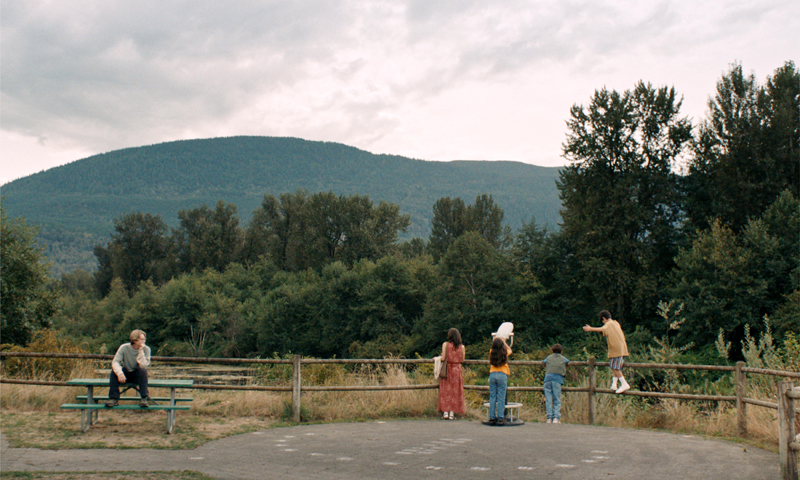
Still from Blue Heron. Courtesy Janus Films.
Blue Heron, written and directed by Sophy Romvari, now playing in theaters in New York City, opens April 24, 2026 in Los Angeles
• • •
In the letter that accompanied the cache of photos, film reels, videotapes, and undeveloped negatives that the Canadian filmmaker Sophy Romvari’s parents released to her, after almost three years of intense negotiation, they described the stockpile as a “treasure box.” In fact, this archive of Romvari’s childhood on Vancouver Island, where she grew up with three brothers, had been tightly sealed for years, its contents less treasured than safely quarantined. It became impossible to look at the images, her father wrote, “after what happened to your brothers.” In Still Processing, the spare, elliptical 2020 short that served as her MFA thesis film, Romvari opens the box on camera, unleashing its young ghosts.
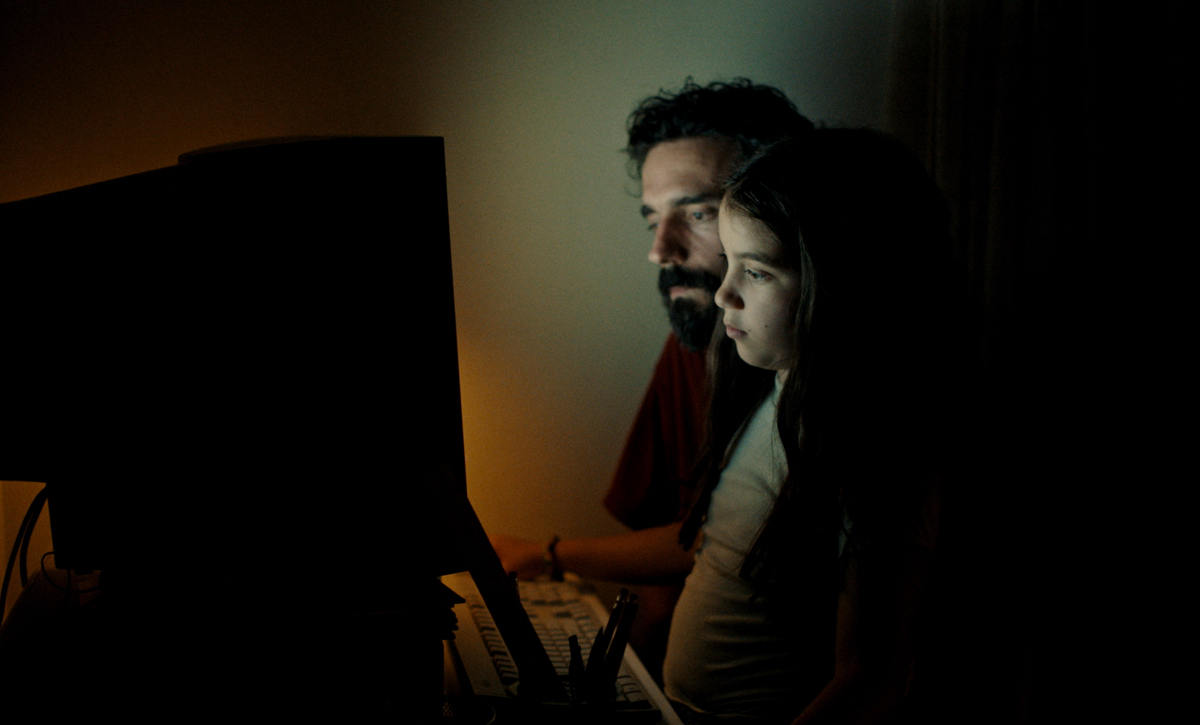
Ádám Tompa as Father and Eylul Guven as Sasha in Blue Heron. Courtesy Janus Films.
The question of what happened to two of her older brothers, both of whom died in early adulthood, lingers. Only the images are legible, an assortment of raucous home movies and moody, black-and-white stills; evidence of a time before grief, now recast by its impression. The images are also redolent with the loss from which they proceed: Romvari’s father, a cinematographer in his native Hungary, had to find other work upon the family’s 1989 immigration to Canada, a frustration he mitigated by documenting his homelife. Romvari and her brothers grew blind to the camera’s presence, he wrote, “because it was always there.”
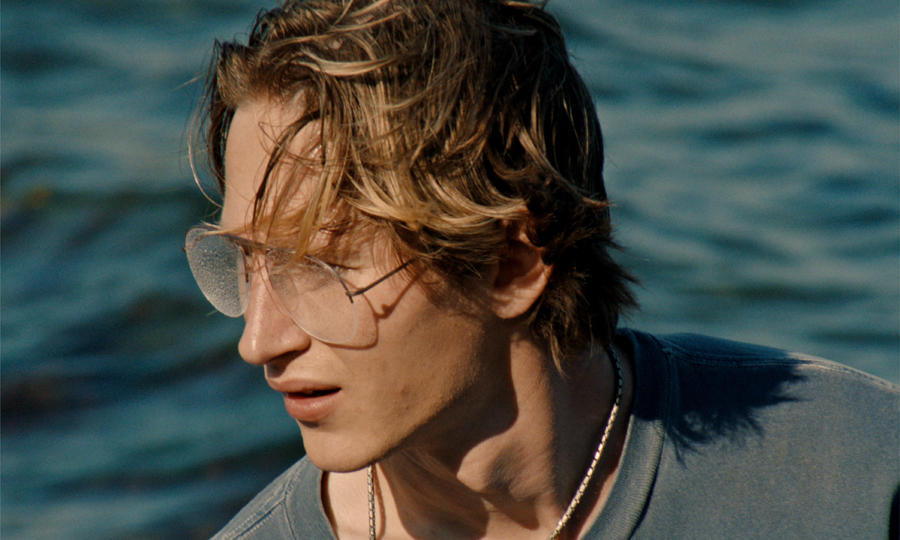
Edik Beddoes as Jeremy in Blue Heron. Courtesy Janus Films.
The reopening of that long-sealed box is a clear precursor to Blue Heron, Romvari’s pensive, extremely personal feature debut. In its prelude, disembodied hands raise an iPhone in a pink case, interrupting our view of Vancouver Island’s panoramic bounty in an attempt to capture it. After a brief, allusive piece of voice-over (“It’s true I spent most of my life being angry at him,” a woman says. “Thank you for your memories, they’re all I have now”) we plunge into the landscape beyond the iPhone, following a family of six as they arrive at their new home. The parents (Iringó Réti and Ádám Tompa) have Eastern European accents; the four children do not. It is the late 1990s, and something beyond the weight of post-Soviet emigration has trailed the family to this lush, tranquil place. A muffled quality suffuses scenes of their unpacking, their commingling as a group, a trip to the nearby bird refuge so Dad can wrestle with Windows95 in peace. Older and fairer than his siblings, Jeremy (Edik Beddoes) soon emerges as the brittle, inscrutable source of this family’s disturbance. (The other boys remain peripheral, Romvari having revised two troubled brothers into one.) The scale of that disturbance reveals itself in painstaking increments, inviting the viewer to contemplate all the ways in which a bonded unit will adapt to and arrange itself around the dark star in its midst. In Jeremy’s unnerving company, even the children attend to the grim work of holding themselves in check, hoping to be spared.
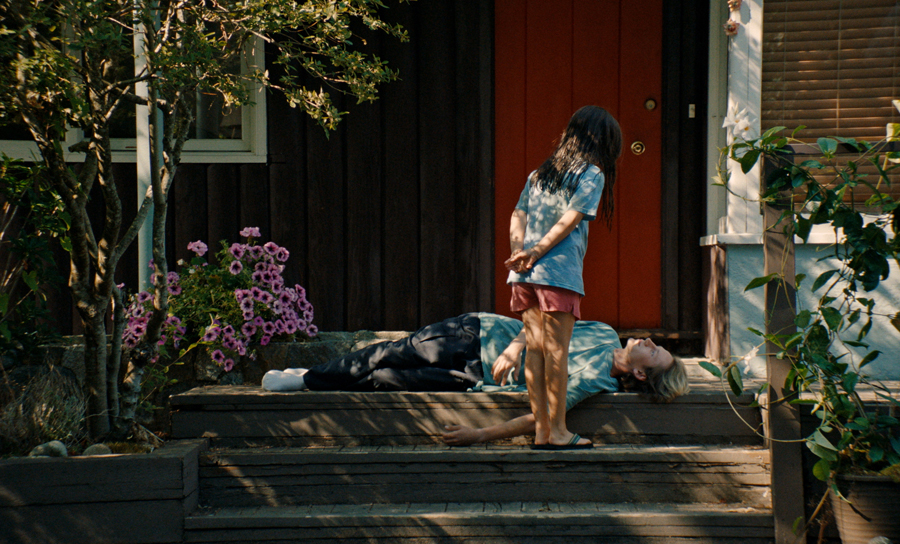
Edik Beddoes as Jeremy and Eylul Guven as Sasha in Blue Heron. Courtesy Janus Films.
As Jeremy’s parents flail over how to help their child, whose behavior escalates from sullen dickishness to a shoplifting arrest and self-harm, Sasha (Eylul Guven), the youngest, casts a cold eye on her eldest brother. His presence is to be regretted, avoided; his conduct absorbed, ignored. Jeremy stalks the house’s exterior, pounding a basketball against its walls, stomping across its roof, playing dead on its porch. A sense of entrapment builds. We are not invited inside or anywhere close to his anguish. Though Sasha insists she is not embarrassed by her brother, her mother says she’d rather Sasha’s new friends not come by the house: “It’s better like this, to keep it separate.” Romvari emphasizes the fracturing effects of Jeremy’s chaos, the way trauma can isolate, replicating the estrangement from which it springs. Other adults are heard but not seen; a gaggle of neighborhood girls appear in sidelong glimpses. Throughout, Sasha’s father prowls about with a camera, his face hidden behind a lens. Occasionally, Romvari flashes on the putative yield of these efforts, black-and-white images that mine beauty and unity from their moments, distilling out the rest.
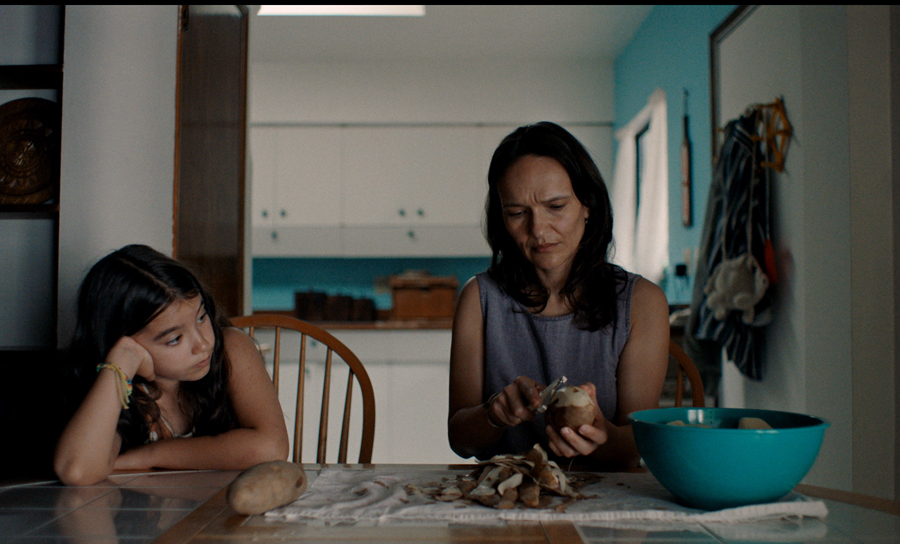
Eylul Guven as Sasha and Iringó Réti as Mother in Blue Heron. Courtesy Janus Films.
At its midway point, Blue Heron splits in two, and an avatar for the writer-director steps into the breach. Traces of Jeremy’s aloneness encircle the young woman (Amy Zimmer) who gathers a panel of social workers to review her brother’s case history. Romvari withholds the rest of Jeremy’s story, lingering instead in its long shadow, and the questions with no good answer: What was wrong with him? What could have been done? Was all of this suffering avoidable? Would it be today, twenty years later? In a fascinating sequence, the young woman watches footage of the family we have just met, and the viewer is left to mull over its provenance—home movie, or the product of a shoot? An ultimate sequence mingles the film’s two worlds, and the young woman confronts the limits of her will to remember, and to intervene. The familial tragedy-in-the-making of the film’s first half will play out unimpeded, she informs Jeremy’s parents, who are also her parents. Nothing will prevent it.
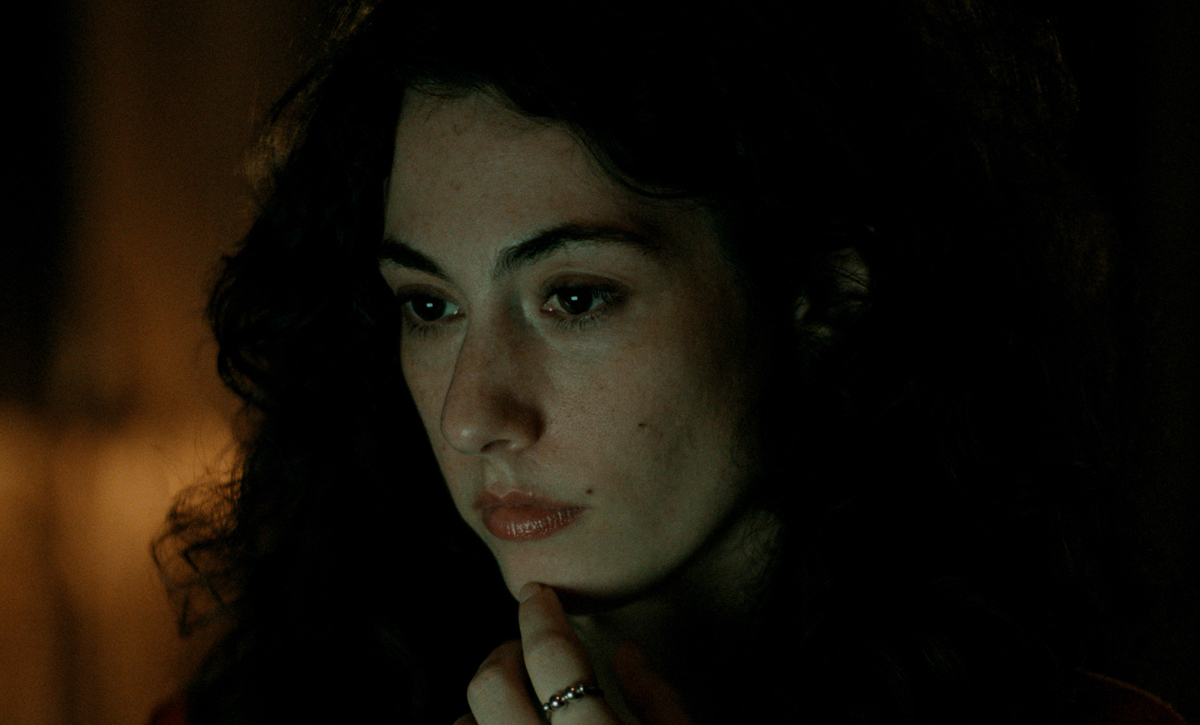
Amy Zimmer as Adult Sasha in Blue Heron. Courtesy Janus Films.
Watching Blue Heron a first and then a second time, I was reminded of Elizabeth Hardwick’s take on the relationship between Sylvia Plath’s suicide and the impact of Ariel, her final work. Without her death, the poems may still be brilliant, Hardwick contends, “but they are obscured and altered. Blood, reds, the threats do not impress themselves so painfully upon us.” Indeed, the poet’s suicide “is a key, central to the overwhelming burst of achievement.” For better and worse, Romvari relies on the pressurizing force that her family’s losses add to this work. Ignorant of that context on first viewing, I frequently had the sense of intruding on a private offering, of appreciating the film’s artistry and formal daring without being moved by it. On second viewing, the same layering of imagery and conceit proved more involving; Romvari’s slow, meditative rhythms had less slack. What remained consistent is the pitch of loneliness that echoes throughout much of this gifted young director’s work. A resource, of sorts, whose origins Blue Heron mourns, and makes plain.
Michelle Orange is the author, most recently, of Pure Flame: A Legacy. Her next book, Dog People, is forthcoming from Astra House.