


 Beatrice Loayza
An exhibition at the Bozar in Brussels traces the origins of the obsession with good looks.
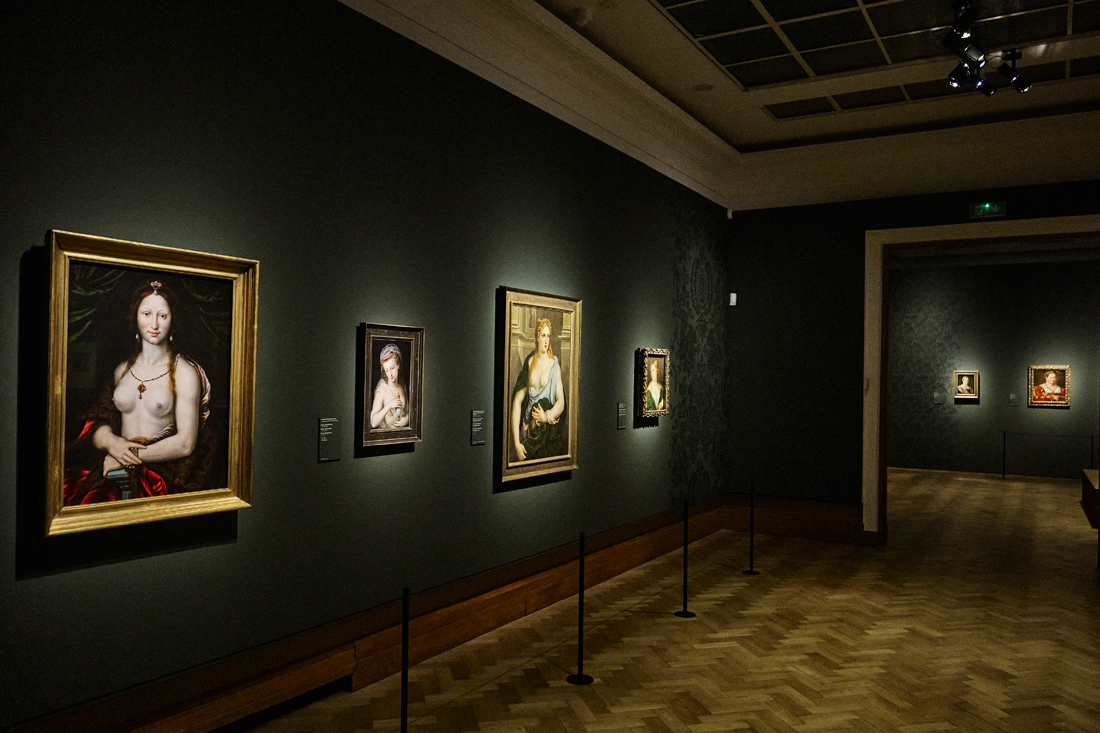
Beauty and Ugliness, installation view. Courtesy the Bozar. © Yannick SAS.
Beauty and Ugliness: The Ideal, the Real and the Caricature in the Renaissance, curated by Chiara Rabbi Bernard, Bozar Centre for Fine Arts, Ravensteinstraat 23 1000, Brussels, Belgium, through June 14, 2026
• • •
The artists of the Italian Renaissance would most definitely laugh in your face if you were to try and explain to them the concept of body positivity. Everyone is not beautiful in their own way. One of the earliest details I remember internalizing about sixteenth-century painting seemed to challenge the flat-ass chic that was the benchmark for female sex appeal in the ’90s and 2000s: corpulent, cellulite-ridden women were cherished for their good looks—a by-product of their wealth and their ability to feed themselves properly. But as heartening as such a fact might have been for young me, I’m not sure that Y2K beauty standards, infamously toxic as they were, could hold a candle to the totalizing aesthetic judgments of the Florentine court, where the fixation with human beauty took on a primacy and rigor that could fuel centuries of dysmorphia.
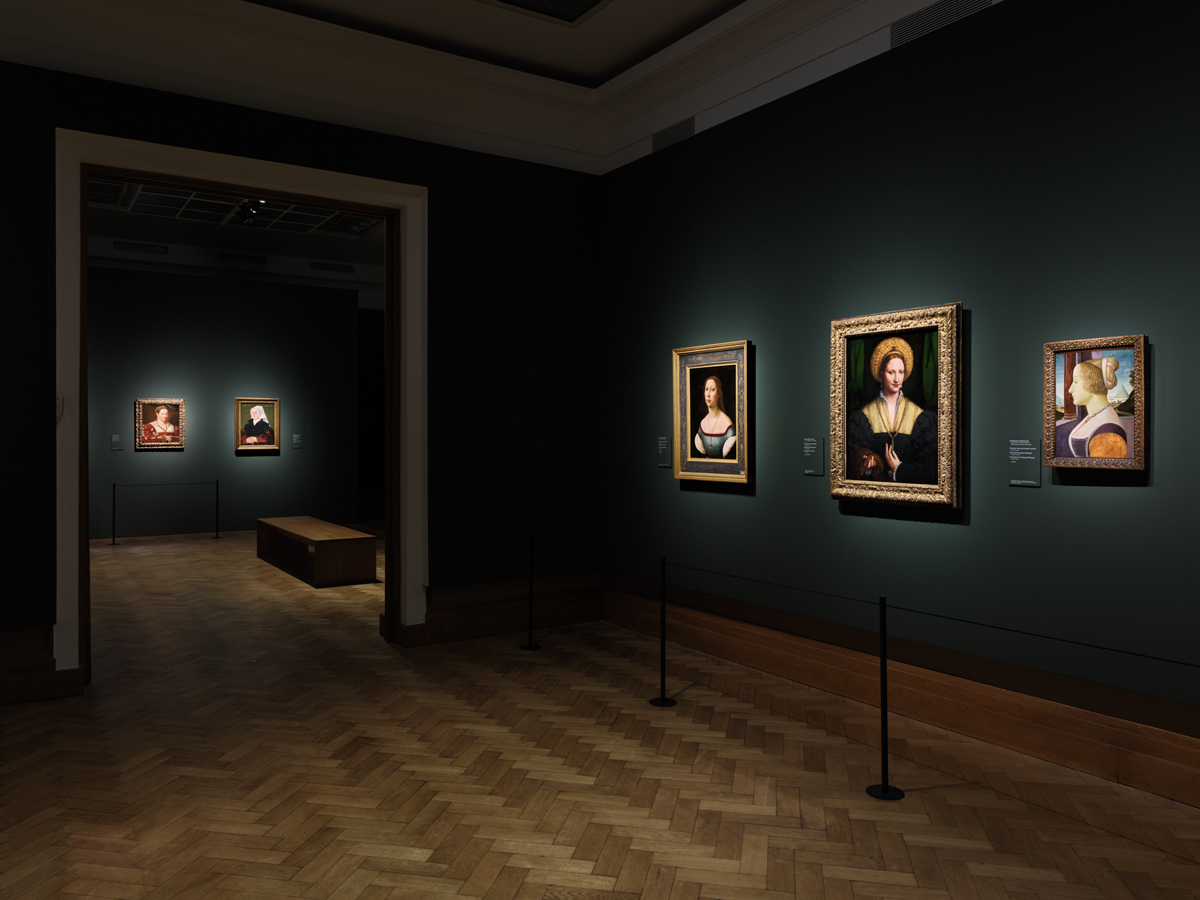
Beauty and Ugliness, installation view. Courtesy the Bozar. © We Document Art. Pictured, far right: Sebastiano Mainardi, Portrait of a Young Woman, ca. 1490.
At the Bozar in Brussels, the exhibition Beauty and Ugliness (its Italian name, Bellezza e Bruttezza, rolls off the tongue much more nicely) traces the origins of this obsession, presenting a little under one hundred works from fifteenth- and sixteenth-century Italy and Northern Europe that demonstrate what the philosopher Pico della Mirandola called the “most marvelous spectacle in this theater of the world”—that is, human emotions, faces, and forms. Having trended through the Middle Ages to the point of overexposure, God and the afterlife began to pale as subjects next to the wilderness of mankind. Artists equipped with humanist ideas resurrected from classical antiquity, as well as the mathematical prowess to pursue unprecedented levels of proportional precision, sought to capture people as they really were.
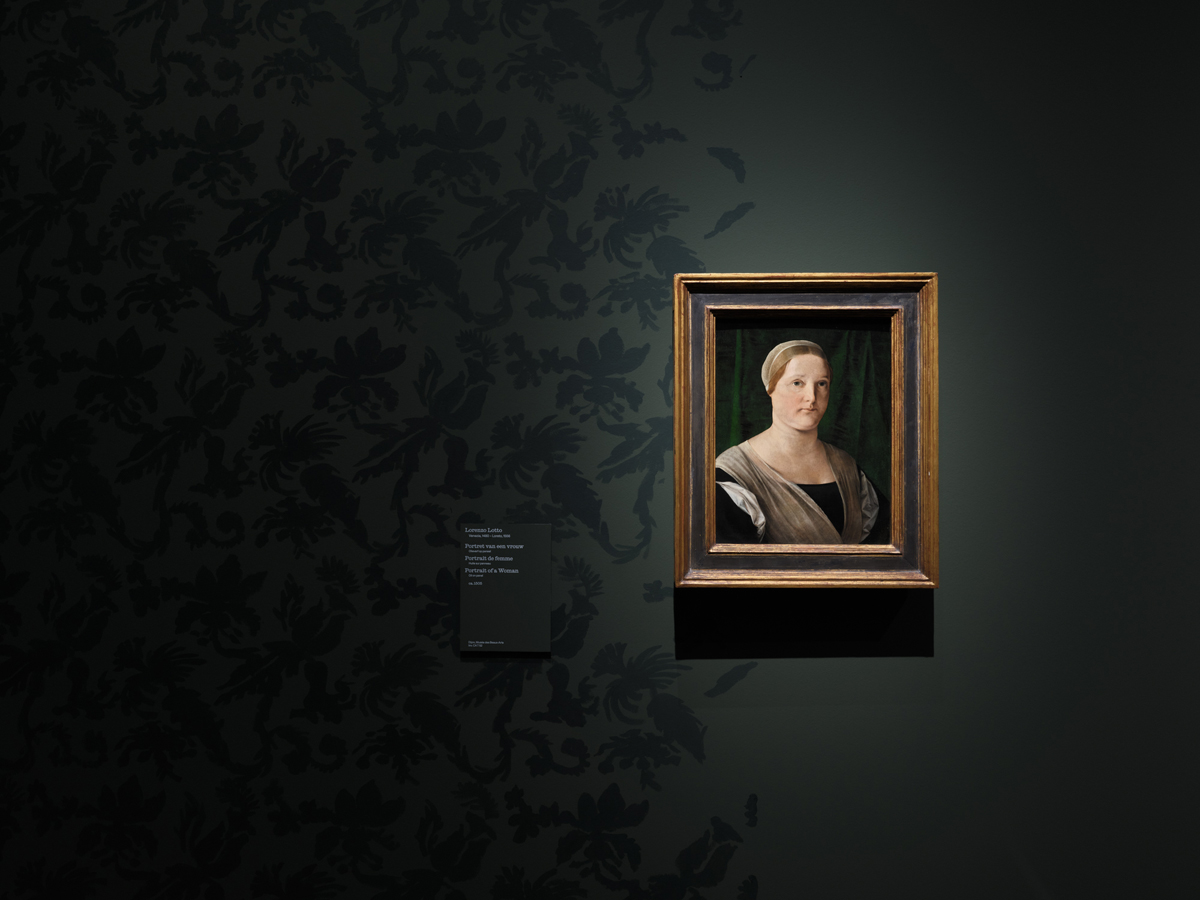
Beauty and Ugliness, installation view. Courtesy the Bozar. © We Document Art. Pictured: Lorenzo Lotto, Portrait of a Woman, ca. 1505.
Sort of. Portraiture did indeed acquire a new verisimilitude, reflecting a shared goal among Renaissance thinkers to render the real world as faithfully as possible. (Consider Lorenzo Lotto’s ca. 1505 Portrait of a Woman, a portly madam dressed in modest attire, her hair pulled up by what looks like a nurse’s bonnet. Lotto’s gal, whose skin is ivory with pink undertones, her irises an ashen-gray with flaxen specks, exemplifies the era’s newfound commitment to detail.) Hubris, however, eventually skewed this objective. Beauty at the time referred to anatomical perfection—a measurable harmony of features and bone structure—so artists striving to depict it were inevitably compelled to editorialize. Cheeks were blushed; visages, blanched; eyes, smoothed and subtly enlarged. In some cases, artists merged, Frankenstein-style, the individual features of several different models to create one sublime being on canvas.
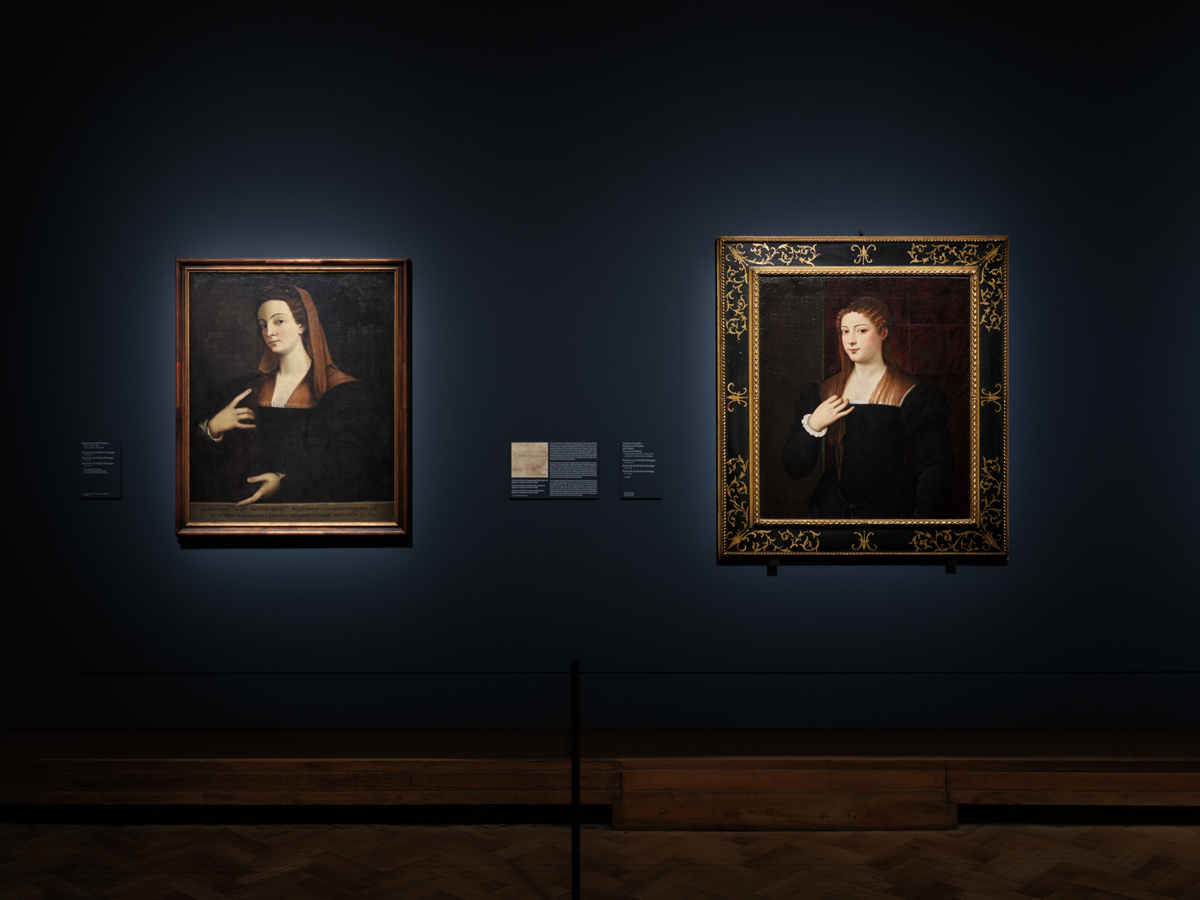
Beauty and Ugliness, installation view. Courtesy the Bozar. © We Document Art. Pictured, right: Titian, Portrait of Giulia Gonzaga, ca. 1534.
These earthly goddesses, grouped together in the exhibition’s initial sections, will seem rather homogenous to the uninformed eye. Context illuminates: ravishing Venetian dames, as in Titian’s Portrait of Giulia Gonzaga (ca. 1534), are forcefully alluring and prone to making eye contact, whereas their Florentine counterparts are icy and distant (for example, Sebastiano Mainardi’s ca. 1490 Portrait of a Young Woman, which also showcases the early Renaissance period’s adoption of Roman coin–inspired side profiles). Still, it’s not entirely a fluke that these fair ladies blur together, given that beauty represents a supposedly correct balance of parts. This fastidiousness, in any case, opened the floodgates of fascination with the opposite—the deviation from these standards, the ugly. Wicked crones. Drunken peasants. Carnival freaks. The dwarf Morgante, the favorite jester of Duke Cosimo I de’ Medici, appears in all his chubby, roguish splendor in bronze sculptures across the room from a portrait of Madeleine Gonzales, an aristocratic woman who suffered from hypertrichosis, or “werewolf disease.”
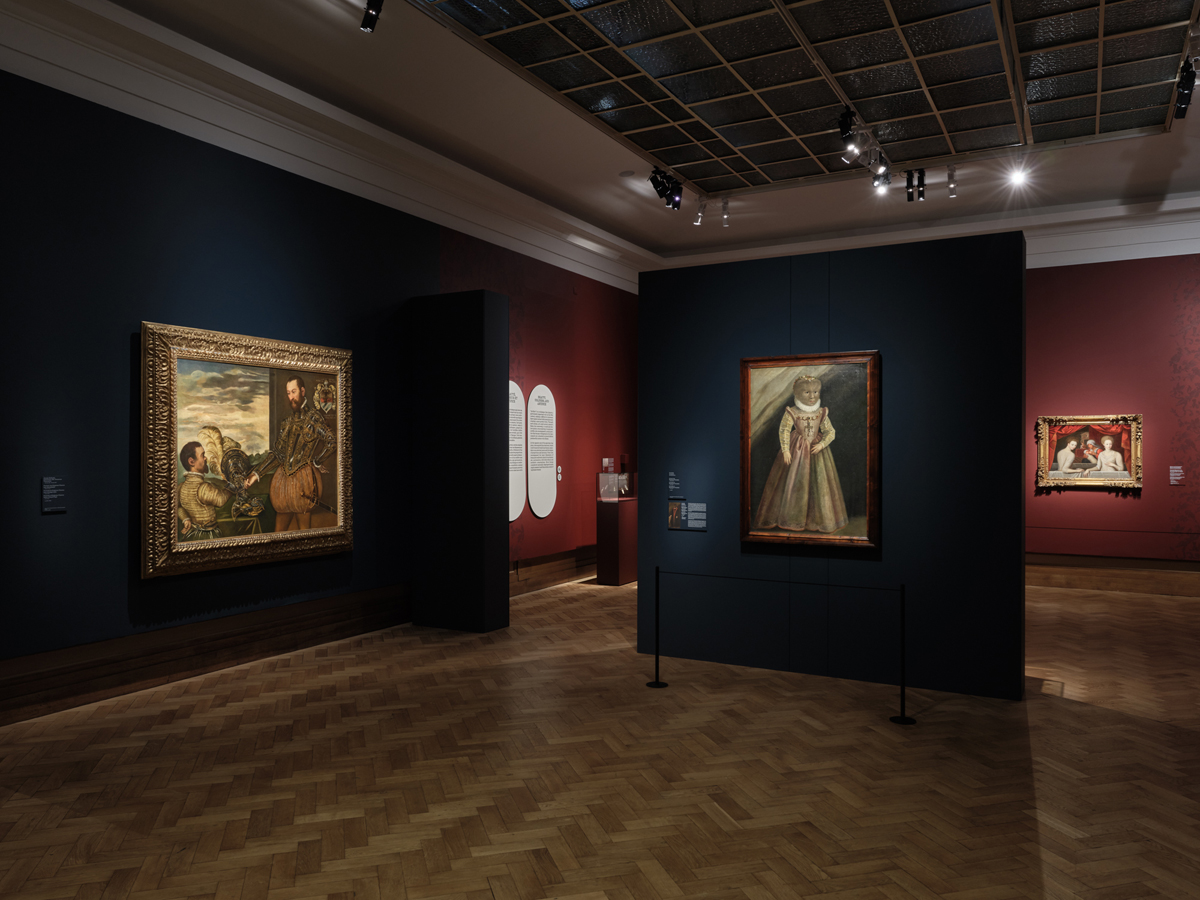
Beauty and Ugliness, installation view. Courtesy the Bozar. © We Document Art. Pictured, right: Anonymous, Portrait of Madeleine Gonzáles, ca. 1580.
As with their beauties, Renaissance artists began to exaggerate. The discovery in the late fifteenth century of the Domus Aurea, a lavish complex constructed during the regime of Roman Emperor Nero, is one explanation for this increasingly enthusiastic embrace of the fantastic. Boasting extravagant frescoes featuring shape-shifting abominations and impish human-animal hybrids, this underground palace sparked a broad interest in the monstrous and imaginary around the same time that Leonardo da Vinci was sketching his “grotesque” series of odd and misshapen heads. The naturalism of sixteenth-century portraiture worked in intriguing tension with the correcting—and/or distorting—powers of artifice. The desire to make oneself beautiful, as evidenced by the popularity of “recipe” books that contained toxic beauty treatments (arsenic mixtures for hair removal; corrosive acids for freckle clearing), often boomeranged into self-disfigurement. Not to cosmetic-shame. In medieval times, women were verboten from brandishing their sinful bodies, but Renaissance ladies were emboldened to make theirs a form of currency. Makeup was a tool that gave them the agency to raise their own value, to perfect their natural forms and bring them closer to the divine—that it could easily backfire resonates today with the fear of a shoddy contouring job (think Marnie’s wedding day in Girls) or a nose job gone terribly wrong.
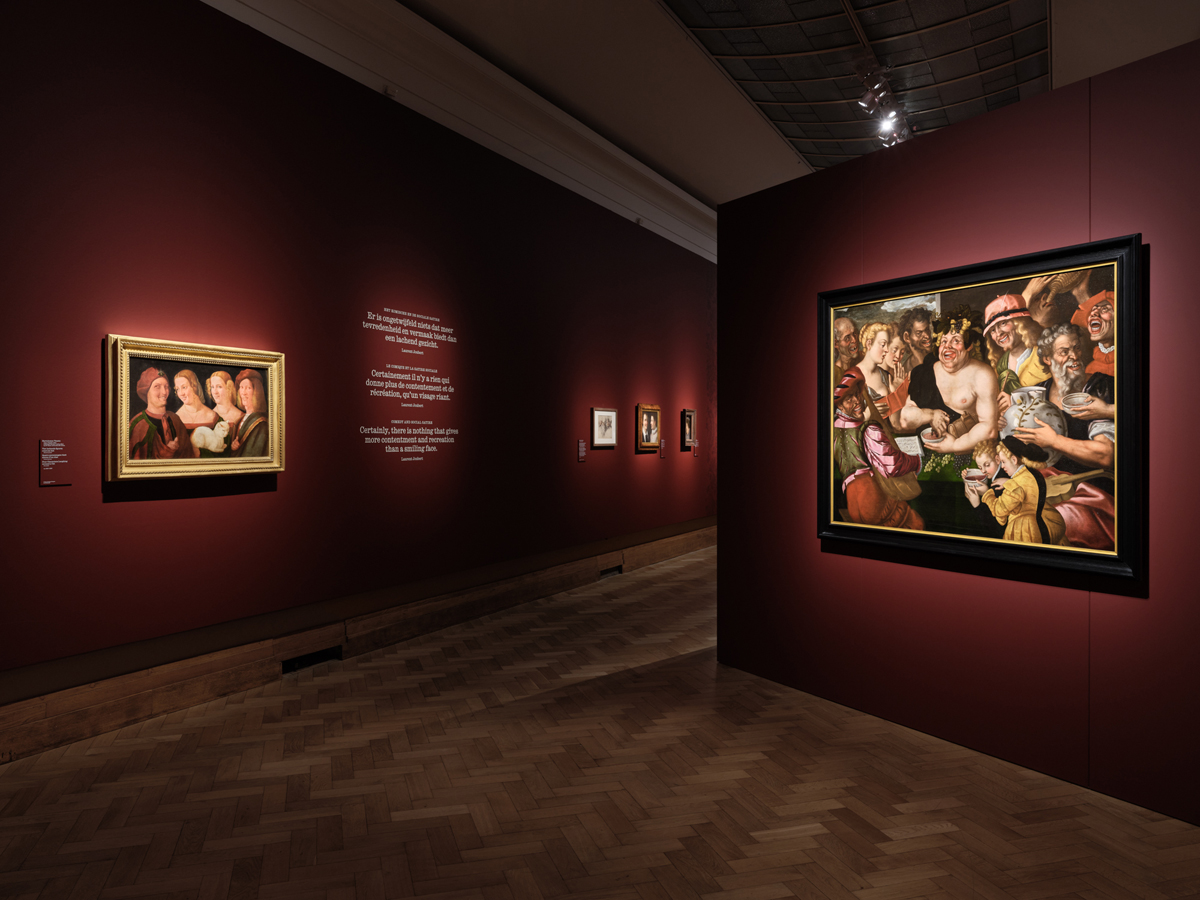
Beauty and Ugliness, installation view. Courtesy the Bozar. © We Document Art. Pictured, far left: Niccolò Frangipane, Four Characters Laughing Around a Cat, ca. 1540–50. Far right: Niccolò Frangipane, A Bacchanal, ca. 1580–90.
On the one hand, the exhibition reaffirms and historicizes what now feels essentially like a truism: beauty entails whiteness and wealth; ugliness, a repository for the old, disabled, poor, and mentally ill. But then why are the images of supposedly repulsive people so beguiling? This crossroads gestures at a modern value system, where strictly good and attractive is eclipsed by the interesting. To quote Umberto Eco: “You cannot tell me that some hells were conceived only to terrify the faithful: they were also conceived to give us a hell of a kick.” Grinning fools, slovenly jesters, and wrinkled farmhands glugging wine occupy epic tableaux by artists like Niccolò Frangipane and Jan Metsys. (Flemish painters proved far more comically perverse in their depictions of the inebriated masses.) Not only would I rather go to these parties, the strange faces here exhibit a playfulness and dark extravagance that make them spiritually muckier and therefore infinitely more alluring.
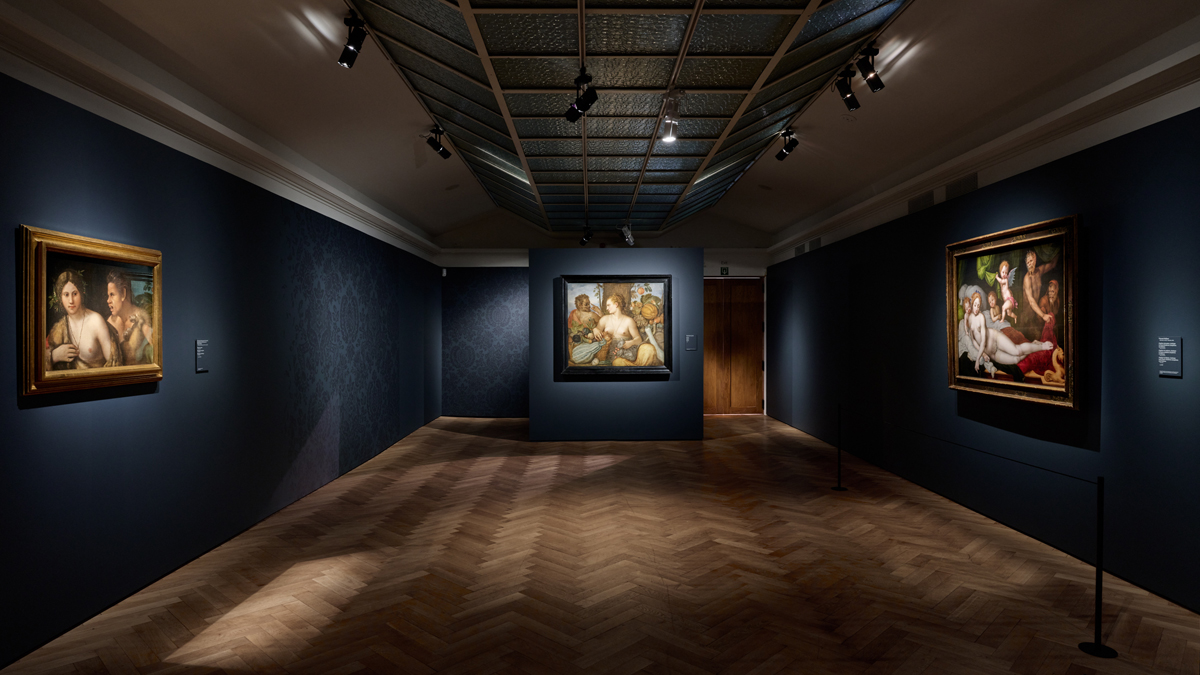
Beauty and Ugliness, installation view. Courtesy the Bozar. © We Document Art.
Some of these figures, clear precursors to the vulgar charms of seventeenth-century burlesque, are chomping on cheese with their mouths wide open or baring their teeth in eerily clenched smiles. Mikhail Bakhtin considered the mouth as the locus of the grotesque, signaling as it does voracity and animal hunger. Perhaps that’s why the final section of Beauty and Ugliness, a hall of mismatched couples—porcelain damsels swindling monied geezers, or, more commonly, crusty gents and literal satyrs tête-à-tête with coy maidens—feels less like a horror show and more like a meditation on the rules of attraction and the weird wiles of our libidinal motivations. The marriage of the beautiful and ugly, well, it can be morbidly compelling (see, bikini-clad girls getting chopped up by Leatherheads in slashers) and sometimes even kind of hot, which anyone who fantasizes about being roughed up and defiled surely understands. Personally, I’d much rather be courted by one of the buffoons in Four Characters Laughing Around a Cat (ca. 1540–50) than a grave, pantalooned bore. Chads are overrated; women prefer funny guys, anyway.
Beatrice Loayza is a writer and editor who contributes regularly to the New York Times, the Criterion Collection, Film Comment, the Nation, and other publications.