


 Sukhdev Sandhu
The digital-arte-povera style of James N. Kienitz Wilkins’s film renders the jankiness and alienation of the modern workplace.
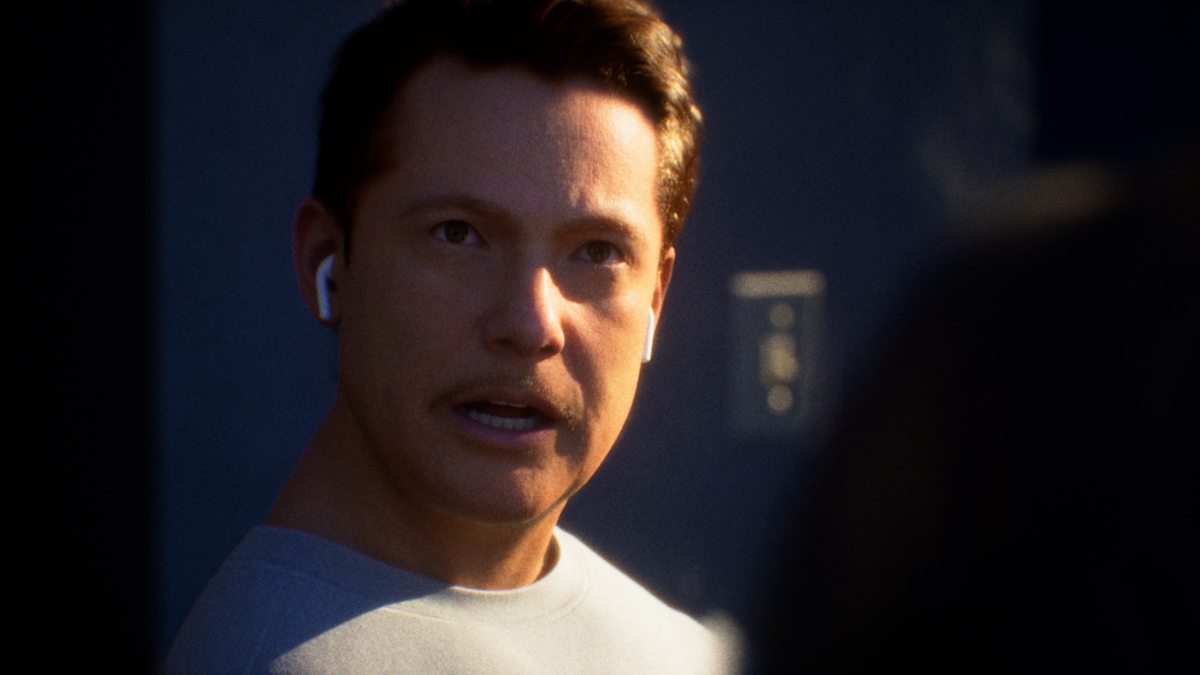
Tobin (voiced by Jesse Wakeman) in The Misconceived. Courtesy Monument Releasing.
The Misconceived, directed by James N. Kienitz Wilkins, now playing at Anthology Film Archives, 32 Second Avenue, New York City,
through May 14, 2026
• • •
Work, Cilla Black once sang, is a four-letter word. Still, needs must. For many years, Octavia Butler was a telemarketer, a dishwasher, a potato-chip inspector. Roberto Bolaño was a dishwasher, too—and a waiter, a garbageman, a night watchman at a campground outside Barcelona. Another dishwasher—Agnes Martin—raised rabbits, directed a playground, coached tennis students. John Huston started out as a boxer. Kathy Acker, who believed “a straight job would lobotomize me,” appeared in porn films and live sex shows in Times Square instead. (Though, after the death of her grandmother, she inherited a trust fund now worth almost $130,000 annually.) Chantal Akerman did time as a cashier at a porn palace, where she stole money to fund early projects such as Hotel Monterey and La Chambre.
Work, according to Mason Currey’s recently published Making Art and Making a Living—from which most of these examples are taken—has often been described by artists as a bore, a chore, an indignity, a hush-hush embarrassment. The Misconceived, directed by James N. Kienitz Wilkins, from a screenplay he cowrote with Robin Schavoir, is a satire about work from the point of view of artists and would-be artists: the work they’re forced or willing to do to pursue their dreams of making art; the humiliations they may face in the process; the ways in which money—or the lack of it—may affect the form and content of the art they produce. Perhaps that sounds like a lot. A film doing overtime. For stretches it resembles nothing so much as an online labor-studies reading group.
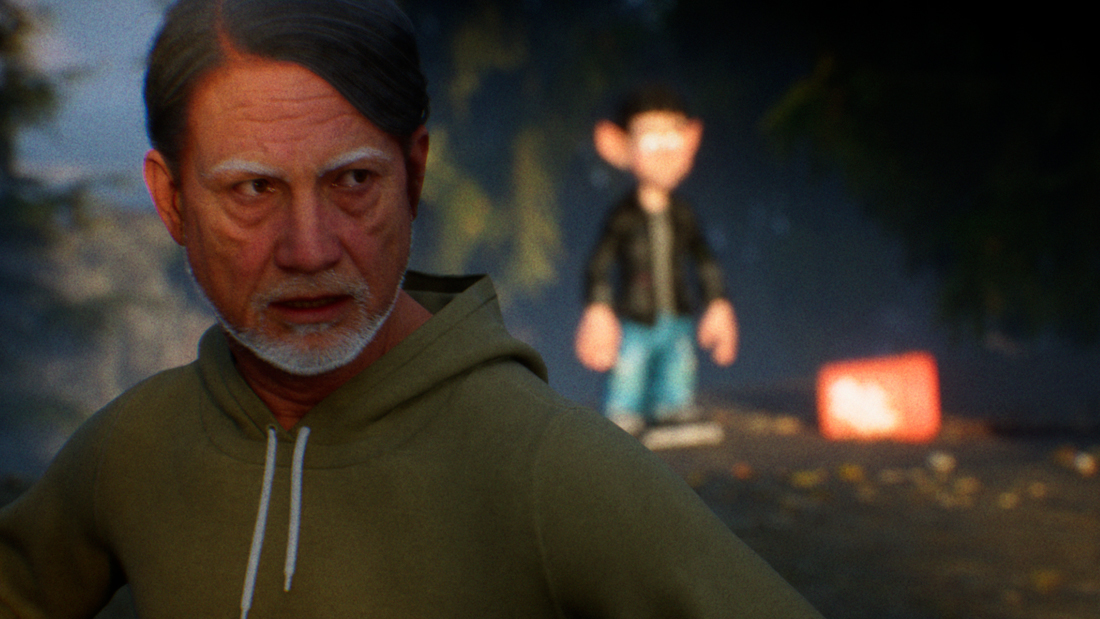
Widgey (voiced by J. Dixon Byrne) and Mikey (background, voiced by Jess Barbagallo) in The Misconceived. Courtesy Monument Releasing.
Down and nearly out in upstate. The protagonist of The Misconceived—which is constructed to look like an animation—is Tyler (voiced by John Magary), a struggling, forty-something single dad with a film-world future in the rearview mirror. Like Lana and Lilly Wachowski after they dropped out of college, he’s in construction; they owned their own business, he’s a gig worker. The start of the film finds him getting hired by taciturn, ponytailed Widgey (J. Dixon Byrne), who’s in charge of a team upgrading the vacation home of—nightmare!—Tyler’s former roommate, Tobin (Jesse Wakeman). Since they last saw each other, Tobin has become a successful sculptor who, to his mustache-twanging excitement, is on the brink of being selected for the next Whitney Biennial.
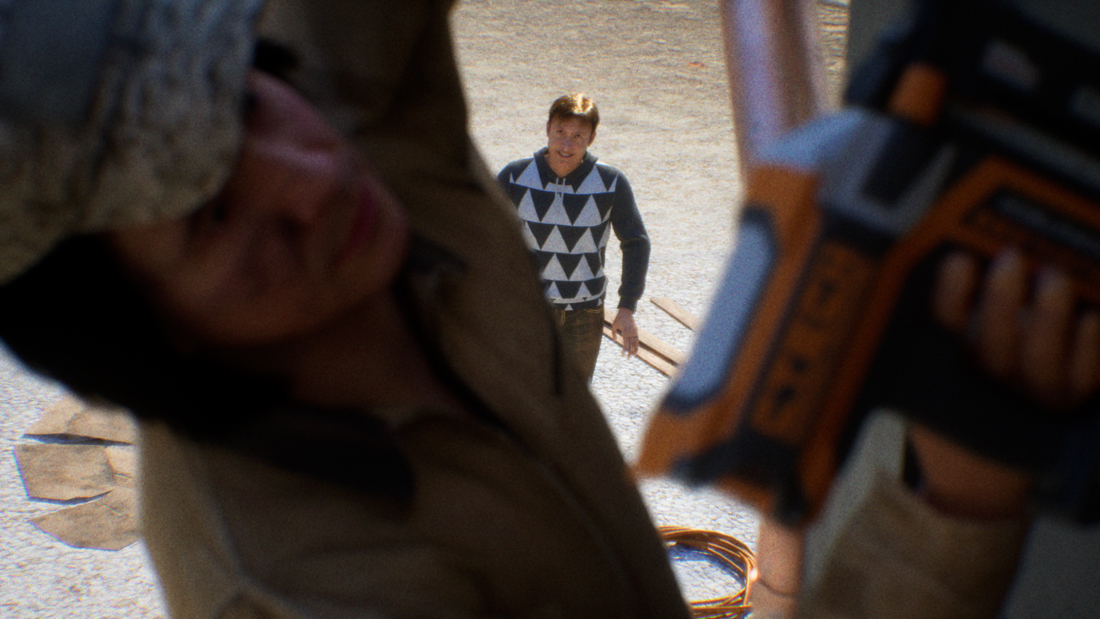
Tyler (foreground, voiced by by John Magary) and Tobin (voiced by Jesse Wakeman) in The Misconceived. Courtesy Monument Releasing.
Picking up a paycheck from an old buddy who says he prefers to employ “someone like us . . . bros before hobos”: creepy, no? Tobin talks about local workers—“a lot of crazies”—like a plantocrat worrying about the natives. His Asian wife Gwen (Rachel Lin), with whom he’s been trying to have a child, is on edge: self-described as “a graphic designer—websites, boring desk job,” she tuts around, fretting over bills and screeching about “plastic in the vestibule.” Even Tobin’s success is far from secure: he knows he’s no longer the new thing and that he’s “at the time in my life where I’ve got to put survival first.” Still, he doesn’t want to be merely a “mid-level artist.” Everything is nicely set up for . . . entropy.
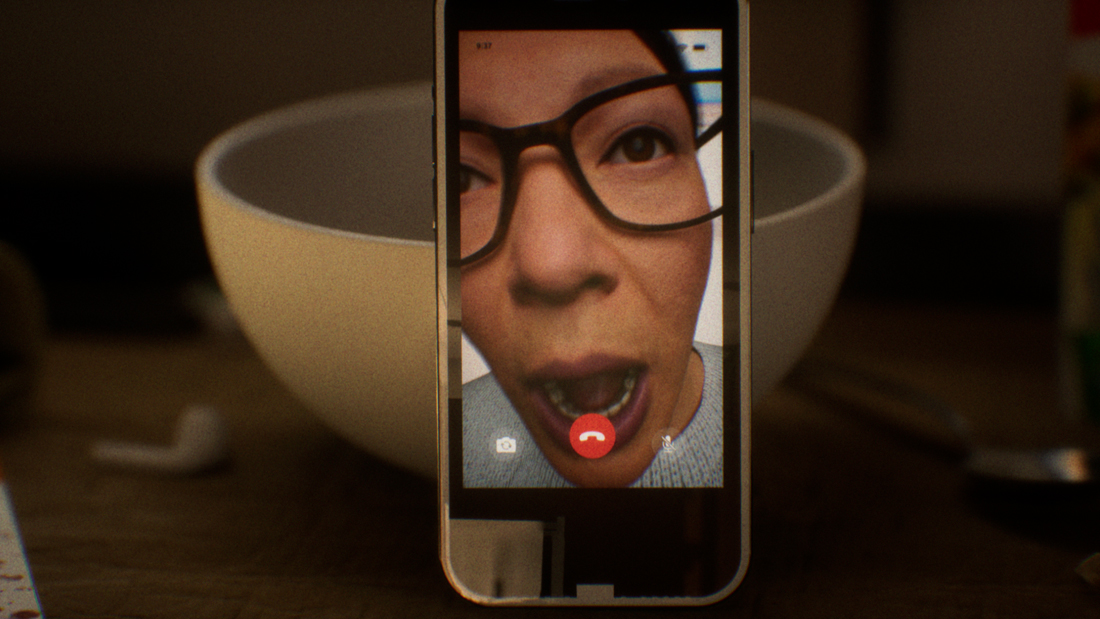
Gwen (voiced by Rachel Lin) in The Misconceived. Courtesy Monument Releasing.
What isn’t so nice is how The Misconceived looks. It’s been made with the same 3D graphic engine used for video games such as Hogwarts Legacy and Final Fantasy VII. Its soundtrack comes courtesy of royalty-free platform Pond 5. This is digital arte povera. Poor images in a poor economy. If some of the characters resemble puppets, their facial muscles frozen, their expressions dead-eyed, their skin as smooth as screen devices, their relation to objects they’re touching or other people in their vicinity next to negligible: this, no doubt, renders the jankiness and alienation of the modern workplace. Is “uncanny” the right word? All I can think of is a recent interview in which Brian Eno recalled playing with watercolors as a child: “After a day of painting, the water that I was dipping my brush into, which was, of course, a mixture of all the colors I’d touched that day, was always the same color. I called it ‘munge’ . . . —horrible color, basically.”
An earlier film by Wilkins, Common Carrier (2017), featured a character called Jibber-Jabber. The Mungeconceived—sorry, Misconceived—is all jibber-jabber too, yammer and honk, mither and moan. Lukewarm takes. Sick grazes rather than burns. Tyler, who resembles a particularly sad, almost somnolent Keanu Reeves, delivers state-of-the-art sermons in which, like an earnest graduate student or the most boring person at a party, he drones on about how “movies can’t keep up with the sheer level of consumption in our ADHD-the-consumer-is-always-right-economy, forced to be at once bespoke and niche yet somehow cheap and common—lifestyle add-ons watched at 1.5x speed, or at the very least, with a solid insulating dose of THC edibles.”
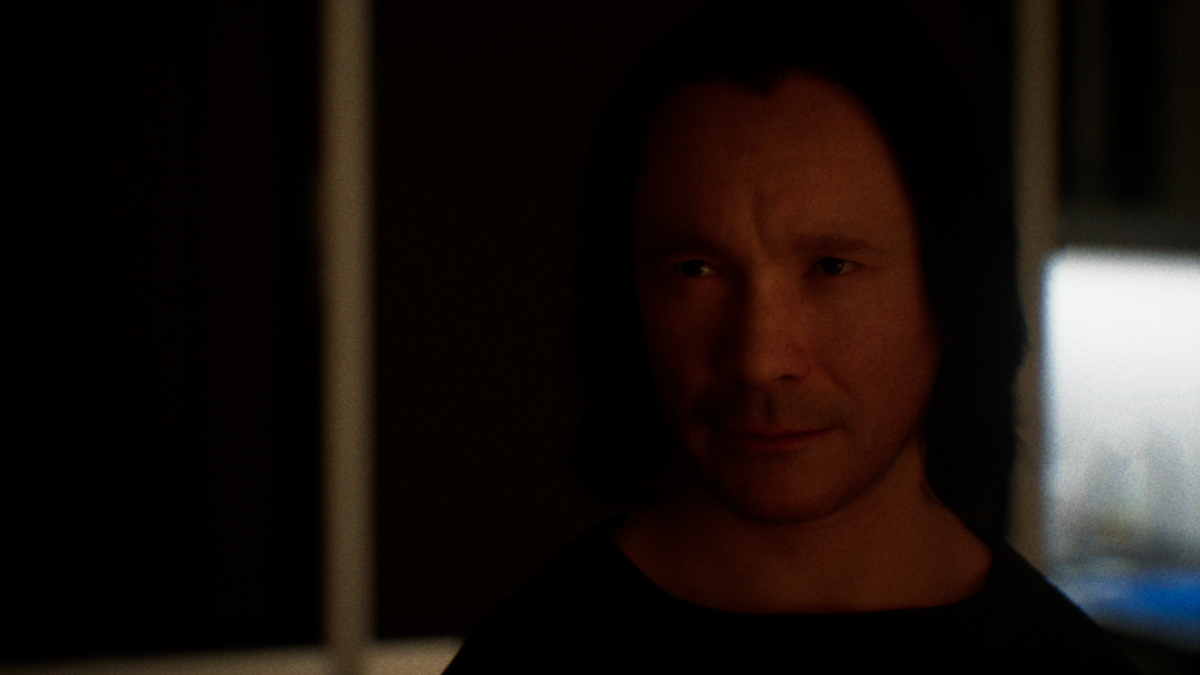
Tyler (voiced by by John Magary) in The Misconceived. Courtesy Monument Releasing.
His questions are stiff, pompous: “What does a movie prove when it’s no longer a language of the people defining the boundaries of what’s possible? Is there even an outside anymore?” Does Wilkins want us to laugh at him? Or at Tobin’s enthusiasm for the Safdie brothers and for Steven Soderbergh’s iPhone movies? No character is likable enough to root for. Not even foul-mouthed, elf-eared teenage “helper” Mikey (Jess Barbagallo), who can’t stop yelling “Bukkake” or deploying crude racial epithets, but lacks the lumpen lyricism or Tourettic élan of, say, Kevin Smith’s deadbeat slackers. Every allusion, verbal or visual, is heavy-handed, wearily ironic, dripping with ennui. References to Triple Canopy and A24 and “queering your practice,” New Yorker critic Richard Brody’s name being pronounced in a French style, a brief confusion between Sean Parker and Sean Baker, dialogue half-inched from Violet Lucca’s negative review of 2019’s The Plagiarists, which Wilkins and Schavoir cowrote: the public being addressed here is a members-only club, an in-crowd flattered and gently tickled more than it is discomforted or disabused.
The modern feature film, Tyler asserts, is “self-serving and retrograde, a backwards exercise in nostalgia, or the cynical prelude to directing a Marvel movie.” Is that true? (And is nostalgia really our enemy?) The Misconceived, no antidote at all, is a would-be dunciad that’s airless, at heart humorless, wholly self-adoring. A film that can’t see the trees for the forest.
Sukhdev Sandhu directs the Colloquium for Unpopular Culture at New York University. A former Critic of the Year at the British Press Awards, he writes for the Guardian, makes radio documentaries for the BBC, and runs the Texte and Töne publishing imprint.